
Last updated on July 24th, 2025
Content writing has advanced well beyond the confines of classical literature in the current digital scenario. Businesses are in search of talented content creators who can narrate gripping stories through words that engage, educate, and convert.
Modern content writers are the builders of digital communication, bridging the gap between companies and their consumers which is done through the creation of captivating blog pieces, viral social media postings, and persuasive marketing copy.
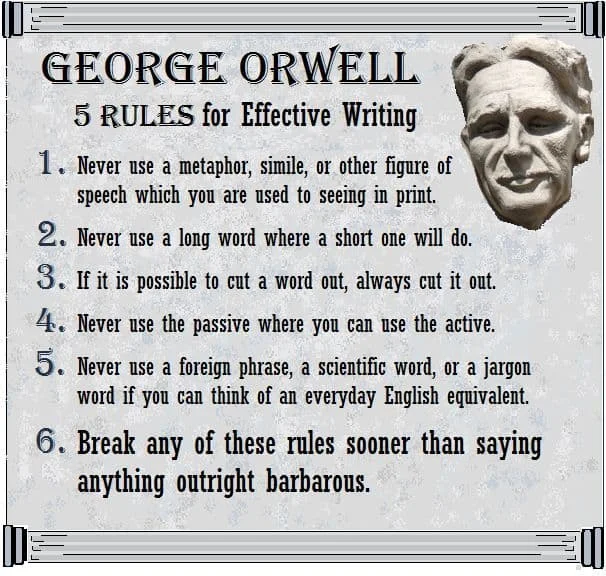
One of the earliest proponents of clear writing was George Orwell, who suggested, way back in 1946, the 5 golden rules for effective writing. It is so surprising that these rules are applicable even in 2025 with E-E-A-T and SEO content.
So let us have a look at these rules.
Rule No. 1 – Use of simple words
Orwell says “Never use a metaphor, simile, or other figure of speech which you are used to seeing in print.” Does the phrase “Low-hanging fruit” mean something to a layman? Can’t it be better written as “non-performing employee”? Now, how many people recognize the words and the sentiments behind them?
By using straightforward language, you can make sure your message is understood by both regular readers and industry professionals. Keep in mind that in content writing, clarity comes before cleverness.
Rule No. 2 – No exaggerated or complex text
There are tons of information available in the age of information overload. As a result, brevity is not just preferred – it’s essential. Complex sentences and unnecessary elaboration can drive readers away.
Orwell says, “Never use a long word where a short one will do.”
“In the entire world, XYZ is selling like hotcakes and gathering a lot of revenues for the company”. Imagine if we write this as “XYZ is the company’s universal best-seller”
Many content writers adopt the beating-around-the-bush approach to increase word count or achieve the desired keyword density. This is a strict no-no as it insults the reader’s sensibilities.
Rule no. 3 – Avoid unnecessary words in content writing
Modern content writing demands precision. Every word should serve a purpose.
Orwell says, “If it is possible to cut a word out, always cut it out.”
This approach not only makes your content more readable but also more impactful. Concise writing is key to getting attention where attention spans are short.
For instance, “In matters that concern the buying of a new car you should be utterly and vehemently careful” can simply be written as “you should be careful when buying a new car.”
Rule no. 4 – Encourage active tone of voice in writing
Active voice brings energy and clarity to your writing, making it more engaging for digital audiences.
Orwell says, “Never use the passive where you can use the active.”
“The man who was old was bitten by a cat”. While there’s no rocket science behind the logic, still this is an oft-disregarded adage. You can always replace the longer sentence with a shorter and more effective “The cat bit the old man.”
This approach makes the content more dynamic and also helps in SEO optimization, as search engines tend to favor clear, direct language that mirrors how people speak and search in real life.
Rule no. 5 – Keep the text readable and easy to understand
Using simple, everyday language ensures wider accessibility
Orwell says, “Never use a foreign phrase, a scientific word, or a jargon word if you can think of an everyday English equivalent.”
Readers will simply block out the content if they come across a lot of technical jargon that they can’t comprehend.
Remember, even when explaining complex topics, clear language helps readers understand and engage with your content better.
Now that you know the rules, apply creativity and let your write-up rise above the rest.
Ready to elevate your writing? Discover George Orwell’s timeless writing rules and unleash your creativity. For expert guidance and polished content, partner with the leading copywriting agency Textuar. Let your words make an impact – explore our services today.
Frequently Asked Questions
Q1: How do these writing rules apply to SEO content?
While SEO requires keyword integration, Orwell’s rules remain relevant. Use keywords naturally within simple, clear sentences. Good SEO writing balances search engine requirements with readability, ensuring content serves both algorithms and human readers effectively.
Q2: Should these rules be followed strictly in technical writing?
Technical writing requires some flexibility with these rules, especially regarding industry-specific terminology. However, the principles of clarity and conciseness still apply. When possible, explain technical concepts in simple terms while maintaining accuracy.
Q3: How can I maintain creativity while following these rules?
Creativity doesn’t require complex language. Focus on unique ideas and perspectives while expressing them clearly. Some of the most creative content follows these rules while delivering fresh insights and engaging narratives.
Q4: Do these rules apply to social media content?
Absolutely! Social media demands even more conciseness and clarity. These rules help create snappy, engaging posts that capture attention in crowded social feeds while delivering clear messages.
Q5: How do I balance brand voice with these writing rules?
A brand’s unique voice can coexist with clear writing. Develop your brand personality through tone and perspective while maintaining simplicity and clarity in language. Remember, distinctive doesn’t mean complicated.