
Last updated on June 22nd, 2026
-Blog content editing tips in 2026 go beyond grammar checks.
-This process improves search intent alignment, readability and factual accuracy.
-It also improves E-E-A-T signals, AI-content quality, structure, and user value.
-A strong edit removes generic content, adds expert insight, verifies sources, improves flow, and helps
Publishing a blog is easy. However, publishing a blog that is clear, useful, trustworthy, and ready for modern search discovery takes a stronger editorial process.
In 2026, blog content editing is no longer limited to fixing grammar, or removing spelling errors. A good edit also checks whether the article does these things-
-It answers the reader’s search intent
-The content shares verifiable information
-It shows real expertise, and
-Gives readers something they can meaningfully use.
This becomes even more important because readers now discover content in different ways. Some people land on your blog through Google Search. Some see it inside AI Overviews. Others may show up via ChatGPT Search, Perplexity or social media.
This means that your blog needs to be written for humans first, but it should still be structured in a way that search engines and AI systems can interpret, summarize and cite.
What is Blog Content Editing?
Blog content editing is the process of improving a blog post before it’s published. It will cover checking the clarity, tone and accuracy. Blog editing tips also include checking the search intent, quality of the sources used and internal linking, along with readability within the article.
This is not the same as proofreading. The primary emphasis of proofreading is grammar, spelling, punctuation, and minor errors. Content editing goes deeper. It questions
-if the article is helpful,
-whether the purpose of each section is clear, and
-if the reader gets a complete answer.
This is particularly significant when it comes to business blogs. While a blog can get visitors to your site, it is only smart editing that can establish trust, explain expertise and motivate your reader to take the next step.
A strong blog edit improves readability, SEO value, authority, trust, and also conversion potential. It turns a rough draft into a piece of content that supports your brand and respects the reader’s time, too.
We will examine further how practical blog content editing tips can help you sharpen every article before it goes live.
Why Blog Editing Matters in 2026
1. Fix the issue of AI slop content
Blogging is now more competitive than ever. AI tools are commonly employed by businesses to generate initial drafts, outlines, summaries and SEO content. This has led to content being published at scale. But it also has a drastic consequence – too much content ends up sounding alike!
At this point human editing can come in handy. They will add a unqiue viewpoint and fact-check information to ensure better engagement and higher dwell time on the page.
2. Fix problems with content writing
A good editor can detect generic paragraphs, weak arguments and redundant ideas. They can also check and fix bad examples, outdated information, unclear titles and content that fails to match a user’s actual query.
Another added plus for a skilled editor is that they will add brand insight, industry examples, expert view and a more natural flow.
3. Optimize content for SEO and AEO
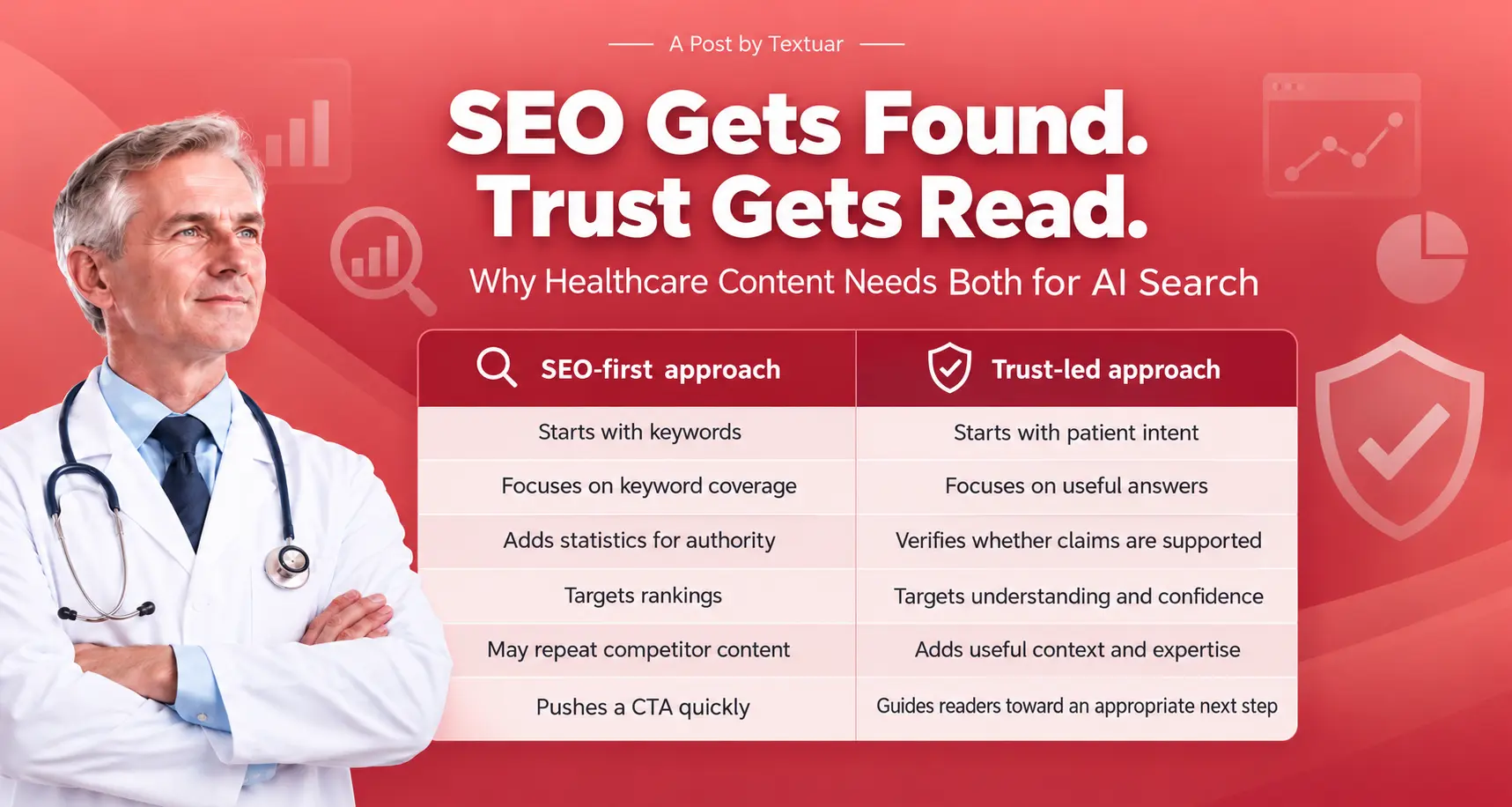
The updated blog editor also aligns with Google’s expectations of Helpful Content and E-E-A.T. You should display experience, expertise, authority, and trust in your article.
This can happen with factual information, providing a direct answer and real examples. Their content will be refreshed for current context. They will also provide author credentials, or helpful takeaways. This helps generative AI tools like ChatGPT and Perplexity to pick the content for building their AI answers.
What are Some Content Editing Tips to Keep in Mind in 2026
Now if you are a blogger and love to do your work keeping every minute detail in mind, then here are 10 blog editing tips for you
1. Keep your audience search intent in mind
As a blogger, your articles will be read by people who share the same interest. Make your blogs for informative for them so that they keep reading your blog content over and over again.
Before you touch a single sentence, pause and ask what the reader is actually reaching for when they type this topic in.
For example, someone searching for “blog content editing tips” is usually not hoping for a theory-heavy essay.
They want a straightforward process, a checklist, and real examples they can use before publishing. If your article spends too much time arguing why blogging matters, but doesn’t show how to edit a blog post, then it kind of misses the point of the search.
Ask yourself these questions before editing:
– Is the reader looking for info, a comparison, step-by-step guidance, examples, or a service?
– Does the article answer the main query early enough?
– Are the headings in line with what the reader expects, not what you personally prefer?
– Is there any section that feels random, outdated or just not relevant anymore?
When the content matches search intent, people tend to stick around longer. Also, search engines get stronger signals about how useful the page is.
2. Sharpen the core message of the blog
Every blog needs one central idea that stays visible the whole time. In my experience, when you edit content, identify that idea and make sure each section supports it, instead of straying off topic.
If the topic is “blog content editing”, then every paragraph should help the reader improve an existing blog draft. Try not to drift into wide discussions about digital marketing, blogging history, or vague “content benefits” unless they directly help with editing.
A solid editing habit is to write a one-line purpose statement before you review the draft.
For example:
“This blog helps business owners, marketers, and writers edit blog posts for clarity, SEO, trust, and better reader engagement.”
Once that purpose is clear, you should trim what doesn’t serve it, or rewrite it so it does. That’s what keeps the article focused. This keeps the content focused and attracts readers to read further.
3. Improve the introduction hook
The intro decides if the reader stays or just bounces out of the site. A weak one often begins with the obvious stuff like “Blogging is very important in today’s digital world.” People have literally seen that sentence hundreds of times and it does not feel fresh.
A better introduction should quickly show the issue, its relevance and what the reader gets out of it by reading further.
For example, instead of something like-
“Blogging is one of the best ways to market your business.”
Try something like-
“Publishing blogs regularly is not enough. If your content is unclear, outdated, poorly structured, or too generic, readers will leave before they understand your value.”
This type of opening feels more grounded. It points to a specific problem and gives the reader a reason to keep reading.
When you edit an introduction, quick check it answers these three things:
– Why does this topic matter now?
– Who is this article for?
– What will the reader gain?
4. Rearrange your work for better flow of narrative
It is very important to categorize your work. Editing is where you tune the order of ideas, so it reads smoother.
Start with the reader’s basic question. Then shift into details, maybe examples, frameworks, comparisons, and action steps. Keep the advanced content for later, do not dump it too early. The reader should feel guided, not overloaded with information.
For most business blogs, a clean structure tends to look like this:
– Define the topic
– Explain why it matters
– Address the main problem
– Share practical steps
– Add examples or checklists
– Answer common questions
– End with a clear CTA
Also check that headings make sense on their own. If someone only skims the H2s and H3s, they still should understand how the article moves from one point to the next.
5. Check facts, sources and data
An out-of-date blog post with older statistics is poor content marketing. If you fail to back up claims with a source, or phrases like “studies show” without the source, it can tarnish the credibility of that blog.
In 2026, both users and search engines will value trust signals thanks to the importance of source quality. If you have details on your blog, be sure they are current, pertinent and sourced from a trusted source.
In my experience, before publishing, you should check-
– Who published the statistic?
– Is it from the original or copied from another blog?
– What year is this data from?
– Does the source explain the methodology?
– Are the facts still relevant to the subject?
– Have you linked to the source where applicable?
It is one of the most crucial content refresh processes for older blogs. Update old statistics, eliminate underwhelming statements, and insert new context as necessary.
6. Add E-E-A-T Signals
E-E-A-T is an acronym for experience, expertise, authoritativeness and trust. It is not a ranking score as such, but an important part of the assessment of quality.
These should be reinforced wherever possible in editing a blog.
You can do this by using:
– Author name and short bio
– First-hand experience
– Client/Industry examples
– Clear source citations
– Updated dates
– Helpful explanations
– Transparent claims
– Relevant internal links
For a content writing firm, E-E-A-T can also come from showing your editorial process. Something like this can be of help:
“At Textuar, blog content is reviewed for search intent, structure, readability, facts, tone, keywords and business relevance, before delivery.
Such note will give readers confidence that the tips are coming from first hand experience.
7. Strictly review AI-generated content
AI tools can support outlining, making rough drafts, generating ideas and even checking grammar. AI written content must be reviewed by humans, however.
The core issue is not the use of AI. The main issue is publishing content that seems like it is fluff, slop or generic. Such AI content tends to be repetitive, inaccuracy or disconnected the brand’s actual expertise.
When modifying AI-generated content, look out for:
– Repeating the same ideas in different words
– Generic phrases that can be used for any type of brand.
– Unsupported claims
– Missing examples
– Weak introductions
– Overly predictable structure
– Omitting what was original
– Lack of original insight
– Tone that doesn’t match the business
Wherever possible, put human value on content. Use actual examples, business problems, observations from experts, client tips, and sharper conclusions.
These were some powerful blog editing tips for a finicky blogger. If blog writing company implements these points, it will help them put their best work out there for their audience to enjoy.