Link Building Strategies Beyond Guest Posting in 2026
📌 TL;DR Summary- What is Covered? Guest posting still works for link building, but it can’t scale alone in 2026
Home » Blog

📌 TL;DR Summary- What is Covered? Guest posting still works for link building, but it can’t scale alone in 2026

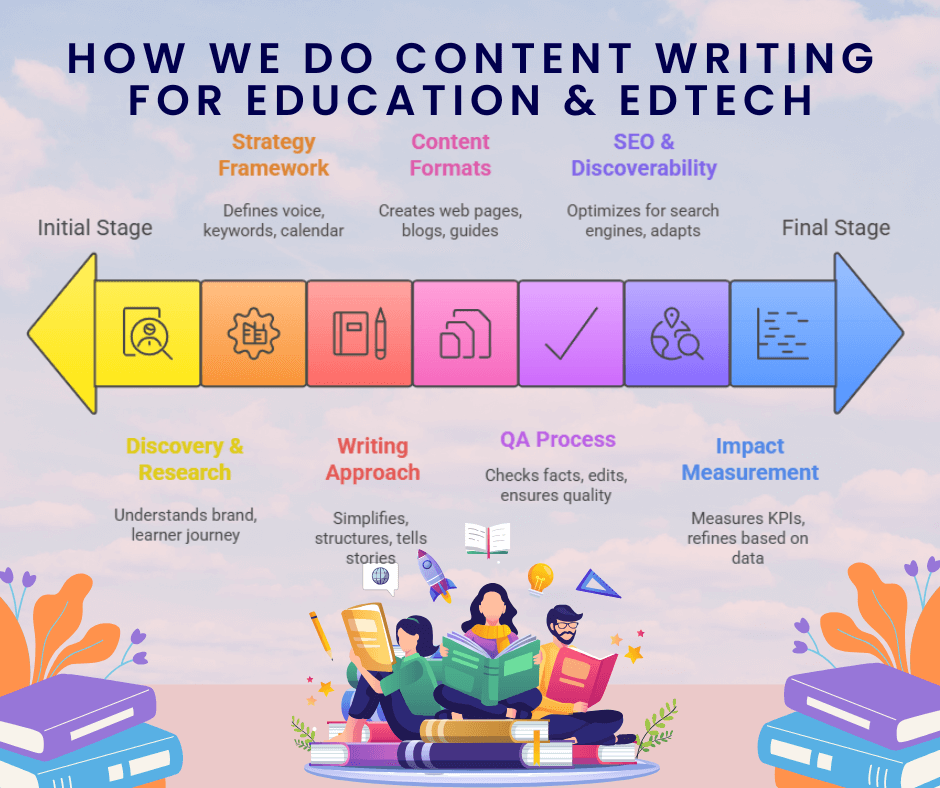
This blog shows precisely why high-quality content writing for education helps institutions and EdTech brands to attract, educate and convert learners. You will see the exact step-by-step process that Textuar uses to write academic and marketing content for educational insitutions like schools, colleges, universities, and edTech-
–discovery and tone creation
–strategy framework
–writing approach
–content formats
–quality assurance
–optimizing for AEO / SEO
–measuring impact
So, if you need clearer communication and higher organic ranking visibility then this guide will show how professional education writing creates measurable results.

Zero click searches are rising as search engines increasingly answer user queries directly on the results page. To stay visible, brands and marketers must adapt. Take a look at some solid strategies like focusing on deeper, intent-driven keywords, publishing original insights, and building strong brand authority. Such steps offer incredible engagement even when there is no traffic to site.
Key takeaways:
==Target deeper, action-driven queries
==Publish original data and expert insights
==Strengthen brand recall and visibility
==Track impressions and SERP presence
==Use schema markup to improve zero-click performance

eLearning content development that delivers real outcomes requires a proven process. This blog explores all the aspects to help you build impactful online training content.
-Who benefits from online training content.
-Expert tips on how to create engaging content.
-Different eLearning content formats and how they influence the learning experience.
-Tips on choosing the right agency like Textuar for eLearning content development needs.

The web is drowning in AI content slop that is lifeless, repetitive content with no empathy or context. This blog reveals how brands, editors, and writers can prevent AI slop in content marketing from degrading online quality. It explains telltale signs, key risks, and Textuar’s 7-step human-first framework to keep writing authentic, accurate, and engaging.
Discover how to balance AI efficiency with human creativity to protect your brand’s credibility and the Internet’s readability.

This blog explores India’s Top 10 Education Content Writing Companies, helping educational institutions and EdTech brands choose the right content partner. It explains what education content writing is, why it matters, and how it drives visibility and trust. From Textuar’s research-driven eLearning content to LexiConn’s corporate training expertise, the post compares services, pricing, and ratings — ending with tips to pick a reliable agency that aligns with your academic goals.

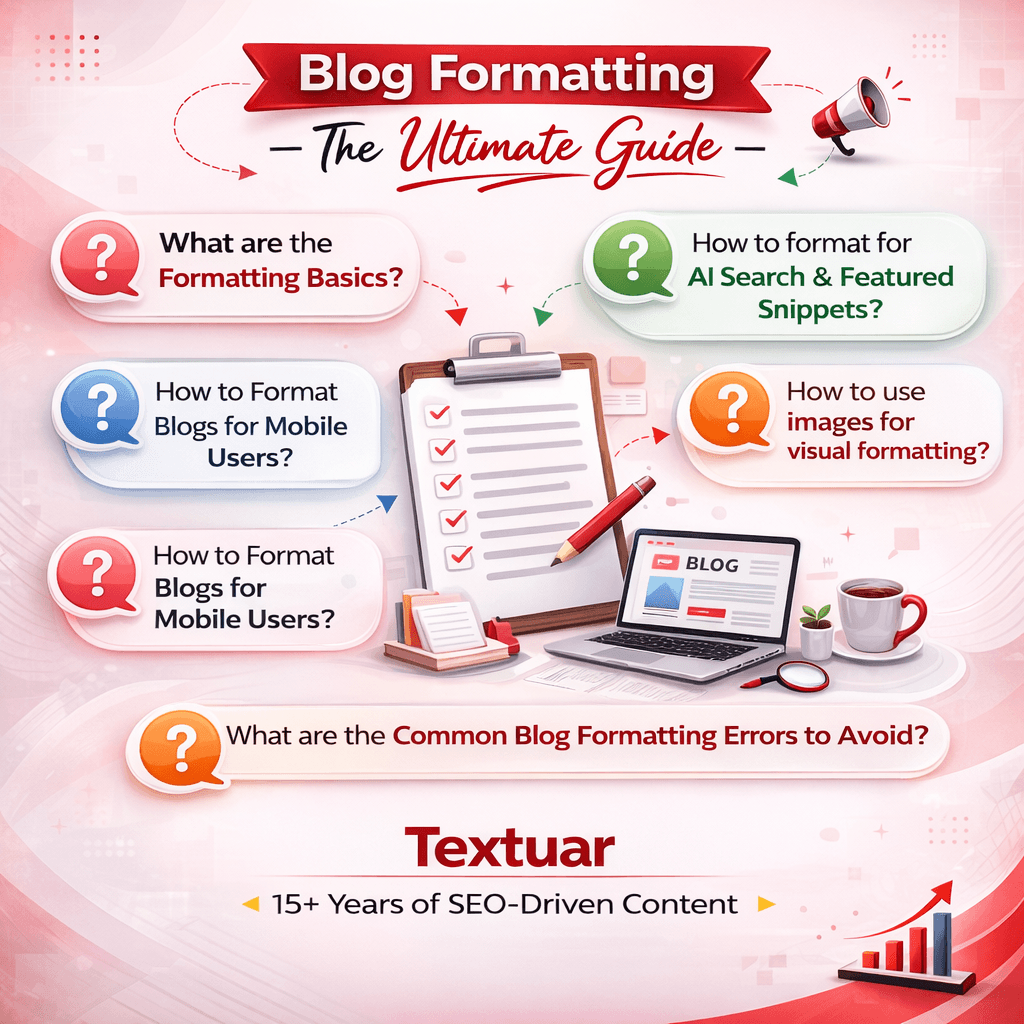
Before publishing, a quick formatting review can make or break your blog’s success. This checklist focuses on structuring your post for clarity and scannability.
-It starts with verifying your heading hierarchy (H2, H3) to ensure a logical flow for readers and search engines.
-Keeping paragraphs short is crucial for mobile readability, while bullet points help organize complex information.
-The guide also stresses the importance of placing visuals near relevant text and including descriptive alt text for accessibility and SEO.
-Finally, maintaining uniform spacing creates a clean, professional layout.
These simple steps transform good ideas into compelling posts that keep audiences engaged.

B2B content marketing trends in 2026 signal a major shift from volume-driven publishing to authority-driven ecosystems. Brands must use AI as an assistant, not a replacement, while prioritizing interactive and product-led experiences. Verifiable expertise and human-first media build stronger trust in an AI-saturated market. Distribution now matters as much as production, requiring strategic amplification across channels. Generative Engine Optimization ensures visibility inside AI tools like ChatGPT and AI Overviews. Winning teams combine structured systems, expert insight, and intelligent distribution. These B2B content marketing trends redefine how brands attract, educate, and convert modern decision-makers.

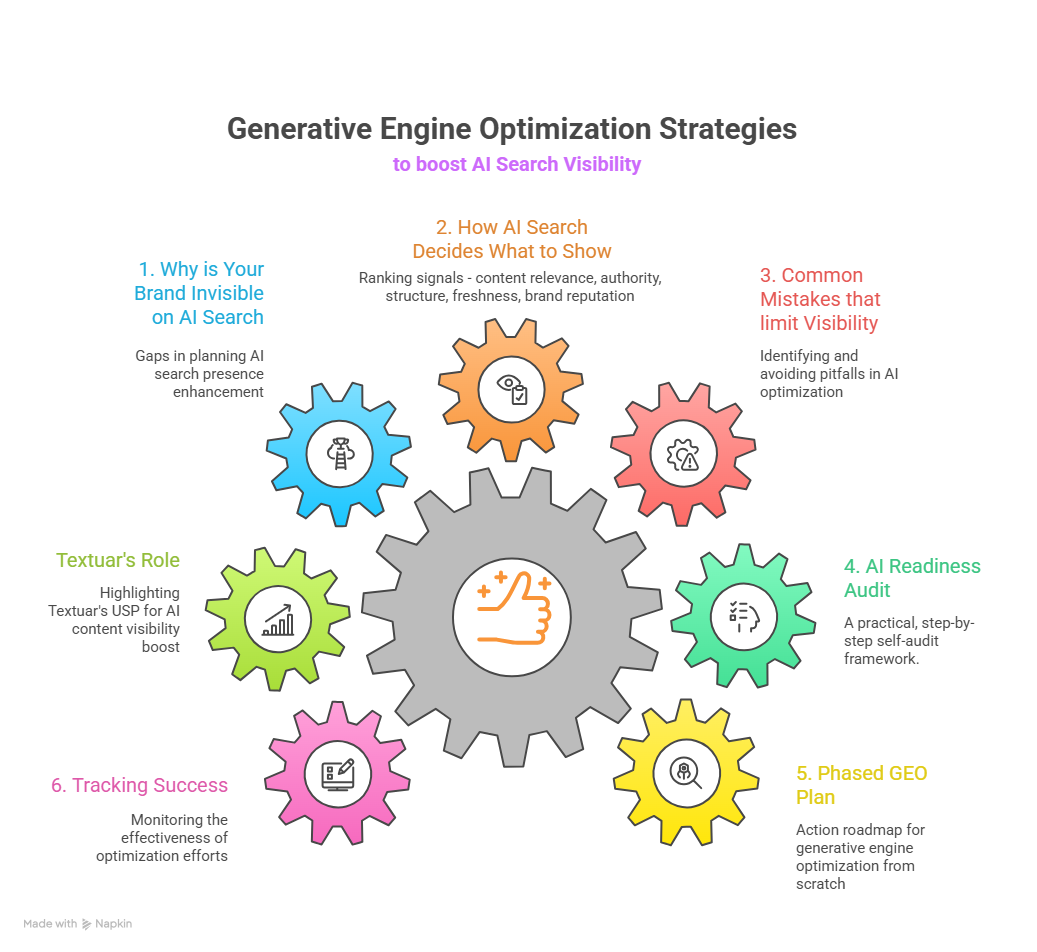
To win in AI search visibility, you must implement Generative Engine Optimization. This means moving beyond keywords and directly answer specific queries and earning third-party citations. This blog covers-
• Why Your Brand Is Invisible to AI Search (Even If Google Loves You) – We cover the issue as a visibility gap, not an SEO gap.
• How AI Search Actually Decides What to Surface – We look at the core ranking signals (content relevance, authority, structure, freshness, brand reputation)
• The 5 Mistakes That Are Killing Your AI Visibility – We check common failure points that can be eliminated with generative engine optimization
• How to Audit Your Brand for AI Search Readiness – Here, we explore a practical, step-by-step self-audit framework.
• A Phased Plan to Rebuild Your AI Search Visibility – You also see a solid action roadmap for generative engine optimization from scratch.
• How to Track Whether It’s Working
• Why Textuar is Ideal for Your Generative Engine Optimization Content Needs

This case study explains how SaaS SEO CTR optimization helped a mid-stage productivity software company convert visibility into real trial signups. The client was generating impressions on Google but wasn’t receiving clicks or conversions. Textuar reworked titles, metadata, content depth, structured data, technical performance, and intent alignment to match how SaaS buyers compare and evaluate tools.
In 90 days, the company achieved a 200% CTR uplift, jumped 18 SERP positions, captured rich-results, and improved demo and free trial signups. The study highlights why impressions alone don’t matter in SaaS; CTR, buyer intent, and demand framing determine actual conversions.

SEO for attorneys is the process of optimizing a law firm’s website, content, and local presence so potential clients can find, trust, and contact the firm through search engines and AI-powered platforms. It focuses on ranking for high-intent legal searches, appearing in local results, and being cited in answer engines like Google AI Overviews and ChatGPT.
Law firms that rank well focus on high-value legal keywords, strong on-page optimization, and local SEO that captures nearby, ready-to-hire clients. Modern legal SEO also requires optimizing content for AI Overviews and answer engines like ChatGPT through clear structure, FAQs, and credibility signals.
When done right, SEO delivers long-term, high-quality leads that outperform short-term ads and keep your firm discoverable as search continues to evolve.