What Are Meta Descriptions?
Meta descriptions are summaries that describe in a limited number of words about what the contents of a particular web page are. They generally contain around 150 to 200 characters but the more crisp and informative it is, the better. They are a very critical part of the search engine result page.
These descriptions contain the keywords being searched and are displayed in the search results by the search engine. Its basic purpose is to entice users to click on to a page. It makes the users stay on to a page making the overall site ranking better.
Good content writing companies know that the better the content of the Meta description, the more it will convince users that it is aligned to the search query. This way, the users click on the link and begin engagement with your brand.
How to Write Great Meta Descriptions
The best content writing company would agree that a meta description’s purpose goes far beyond just making it appealing. The text needs to be written to maintain the accuracy and meet the expectations of the searchers.
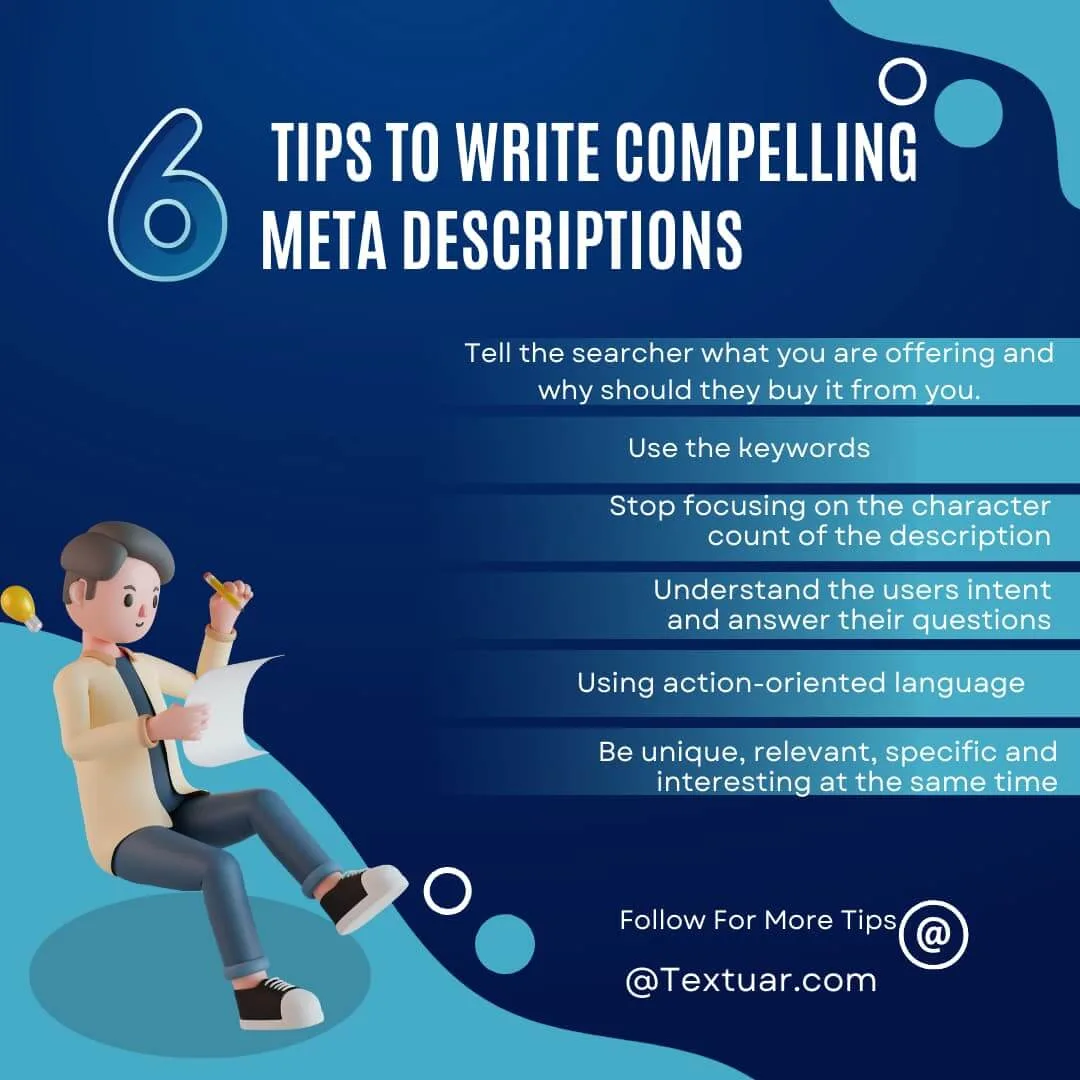
Some of the key factors to keep in mind to write clear, helpful and informative Meta descriptions are:
-
Tell the searcher what you are offering and why should they buy it from you.
The Meta description should always contain the information as to what the web page provides to the searcher and compel him to look into it further. It should tell the users what the unique features of the web page are and what the distinctive selling propositions of the website are.
-
Use the keywords
Using the keywords while writing a Meta description is a very important point to remember. Keywords make it fairly clear that the web page offers the solution to the searchers problem. Not using keywords on the other hand, is a very fatal mistake. It is not necessary to stuff the description with keywords but they should be present as to indicate the useful and relevant nature of the website.
-
Stop focusing on the character count of the description
One should not worry about the length of the Meta description. Although the common practice is to restrain oneself within 155 to 160 words but it has been found in the experiments conducted by SEMrush that the Meta descriptions that exceeded the count of 320 performed better and were ranked higher.
-
Understand the users intent and answer their questions
Understanding what user is searching for and providing the answer to that is very important when it comes to Meta description. Also, from the keywords used by the searcher his intention should be drawn i.e. what is the information being sought by the user and what will probably satisfy his search.
-
Using action-oriented language
Use of action-oriented language is very important. Words like “learn”, “discover”, “study”, “grab”, “download”, will inform the users of what the web page is providing and prompt the searchers to click on the link. Action-oriented language is ideal for a compelling call-to-action.
-
Be unique, relevant, specific and interesting at the same time
Meta descriptions are the litmus test for quality of the web page content and hence it is very important for it to be unique and specific. At the same time you only have very little time to make an impression and hence it must also be relevant and interesting. It must not be generic or boring.
To sign off
Meta descriptions are in the market to stay and are not going away any time soon. With the use of the methods mentioned above and some practice, one should be able to write very convincing and compelling Meta descriptions in no time.