What is the difference between blog content and web content?

blog writing versus web content writing

Many content writers face a stiff challenge when it comes to writing website content. A good content writer will know that there are various differences that set apart a blog from a website content. In fact, many customers too do not know the difference and end up requesting a blog when they actually wanted sales promotional website content.

If you too are facing this dilemma, then you are the right place. Today, we will have a look at the various subtle nuances that define blog content and how it is different from website content writing.

Differences between blog content writing and web content writing

1 – Intent                  

Blog – In blog content writing, the intent is to provide useful information around a central theme and then carefully introduce the reader to your service offerings at the end

Website content – Whereas the intent of web content writing is to make a sales pitch to readers about why they should go with your brand and not choose your competition over you.

2 – ‘About me’ attitude

Blog – The blog content writer will not mention ‘we’, ‘our’, ‘us’ etc., in the blog as it is not directly pitching your brand. Maybe, at the end, as a part of the call to action, you can use these words contained in a paragraph but not more than that

Website content – Here the introduction itself will use the word ‘we’, ‘our’, ‘us’ etc., as you are introducing your brand/ service/ product to the readers

3 – Coverage

Blog content – The Blog content will cover a particular topic around an issue or concern to help readers and gain loyal readership

Website content – In web content writing, there will be a proper explanation of each service/product (or that particular service/product page). This covers features and benefits of that service/product.

Use cases

Take the case of a digital marketing company for instance.

Their web content will have information on different services like SEO, SMM, Search Marketing, and SMO. Each piece of content will be devoted to explaining what is offered under a specific service and why customers should award business to the digital marketing company and not to their competitors.

Now, if the same digital marketing company wants to push fresh and helpful content and target SEO keywords then they would publish blog content on their blog page. It will not cover the actual service but topics around the service. For instance – “Top SEO trends of 2019” (yup, we like to be way ahead of our time!) or “Why PPC is beneficial for a small business?”

What’s common in blog content and web content?

Besides these differences, there are certain common themes that define how content is developed in both approaches –

1 – Language should cater to the persona of your target market

2 – SEO friendly content that ranks strives to rank well on pre-defined list of keywords

3 – There is one central idea being discussed in the content

4 – Content follows a logical structure i.e. introduce with a challenge or pain point and end with a conclusion that gives readers a hint of what to do next after reading the content (click on ‘buy now’,  ‘subscribe now’, or be directed appropriately from a landing page’ etc.)

The perils of blatantly promotional blog

Do note that today many businesses try to weave in heavy promotional undertones when developing blog content. While it may work to a certain extent, it will start to backfire if used blatantly. The readers looking for a blog are actually going as per the principles of inbound marketing – i.e. readers coming to the blog rather than you pitching your offerings to them. They need to be convinced of your credibility and industry authority before they make their mind to make a purchase from your business.

Hence, it will be wise not to overlap the basic intention behind developing the two distinct types of content – i.e. blogs for informative content and web content for sales persuasive content.

Share This Post

Recent Posts

SEO vs AEO vs GEO
AI SEO

How to Optimize Content for ChatGPT and Google AI answers (GEO vs SEO vs AEO)

Search has evolved from blue links to AI-generated answers. Traditional SEO drives traffic to websites. AEO (Answer Engine Optimization) delivers direct answers in snippets and voice results. GEO (Generative Engine Optimization) ensures your content gets cited by AI platforms like ChatGPT, Perplexity, and Google AI Overviews.

To win in 2026, combine all three to win in GEO vs SEO vs AEO. Use clear, upfront answers, question-led headings, and trust-driven content.

Stop competing for clicks. Start competing for answers with quality content.

blog formatting checklist
Blog Writing

Blog Post Formatting: A Simple Checklist Before You Publish

Before publishing, a quick formatting review can make or break your blog’s success. This checklist focuses on structuring your post for clarity and scannability.
-It starts with verifying your heading hierarchy (H2, H3) to ensure a logical flow for readers and search engines.
-Keeping paragraphs short is crucial for mobile readability, while bullet points help organize complex information.
-The guide also stresses the importance of placing visuals near relevant text and including descriptive alt text for accessibility and SEO.
-Finally, maintaining uniform spacing creates a clean, professional layout.
These simple steps transform good ideas into compelling posts that keep audiences engaged.

b2b content marketing trends 2026
Content Marketing

B2B Content Marketing Trends to Follow in 2026

B2B content marketing trends in 2026 signal a major shift from volume-driven publishing to authority-driven ecosystems. Brands must use AI as an assistant, not a replacement, while prioritizing interactive and product-led experiences. Verifiable expertise and human-first media build stronger trust in an AI-saturated market. Distribution now matters as much as production, requiring strategic amplification across channels. Generative Engine Optimization ensures visibility inside AI tools like ChatGPT and AI Overviews. Winning teams combine structured systems, expert insight, and intelligent distribution. These B2B content marketing trends redefine how brands attract, educate, and convert modern decision-makers.

AI SEO

How to Use Generative Engine Optimization to Boost AI Search Visibility

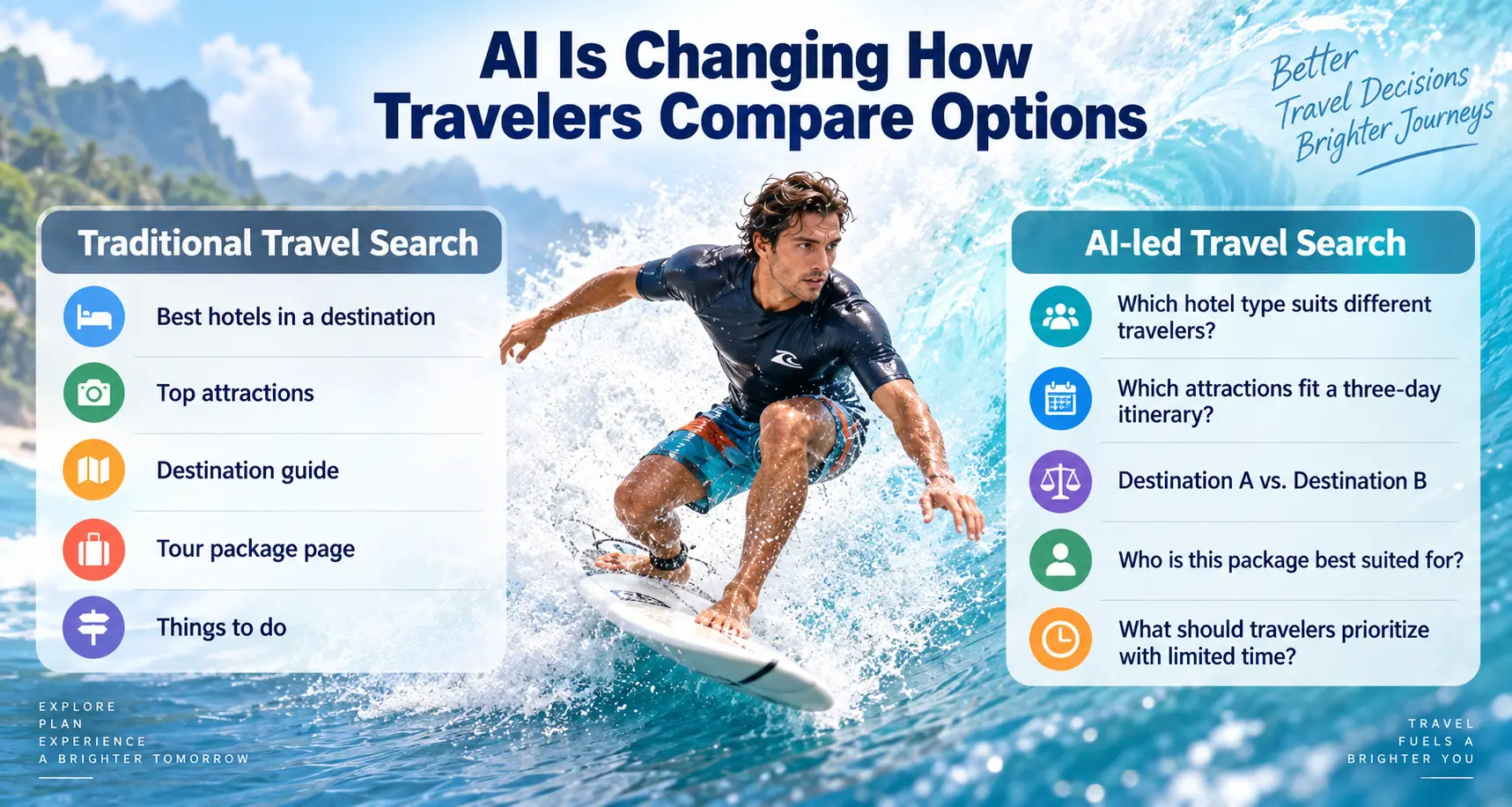
To win in AI search visibility, you must implement Generative Engine Optimization. This means moving beyond keywords and directly answer specific queries and earning third-party citations. This blog covers-
• Why Your Brand Is Invisible to AI Search (Even If Google Loves You) – We cover the issue as a visibility gap, not an SEO gap.
• How AI Search Actually Decides What to Surface – We look at the core ranking signals (content relevance, authority, structure, freshness, brand reputation)
• The 5 Mistakes That Are Killing Your AI Visibility – We check common failure points that can be eliminated with generative engine optimization
• How to Audit Your Brand for AI Search Readiness – Here, we explore a practical, step-by-step self-audit framework.
• A Phased Plan to Rebuild Your AI Search Visibility – You also see a solid action roadmap for generative engine optimization from scratch.
• How to Track Whether It’s Working
• Why Textuar is Ideal for Your Generative Engine Optimization Content Needs

Related Posts

SEO vs AEO vs GEO
AI SEO

How to Optimize Content for ChatGPT and Google AI answers (GEO vs SEO vs AEO)

Search has evolved from blue links to AI-generated answers. Traditional SEO drives traffic to websites. AEO (Answer Engine Optimization) delivers direct answers in snippets and voice results. GEO (Generative Engine Optimization) ensures your content gets cited by AI platforms like ChatGPT, Perplexity, and Google AI Overviews.

To win in 2026, combine all three to win in GEO vs SEO vs AEO. Use clear, upfront answers, question-led headings, and trust-driven content.

Stop competing for clicks. Start competing for answers with quality content.

blog formatting checklist
Blog Writing

Blog Post Formatting: A Simple Checklist Before You Publish

Before publishing, a quick formatting review can make or break your blog’s success. This checklist focuses on structuring your post for clarity and scannability.
-It starts with verifying your heading hierarchy (H2, H3) to ensure a logical flow for readers and search engines.
-Keeping paragraphs short is crucial for mobile readability, while bullet points help organize complex information.
-The guide also stresses the importance of placing visuals near relevant text and including descriptive alt text for accessibility and SEO.
-Finally, maintaining uniform spacing creates a clean, professional layout.
These simple steps transform good ideas into compelling posts that keep audiences engaged.