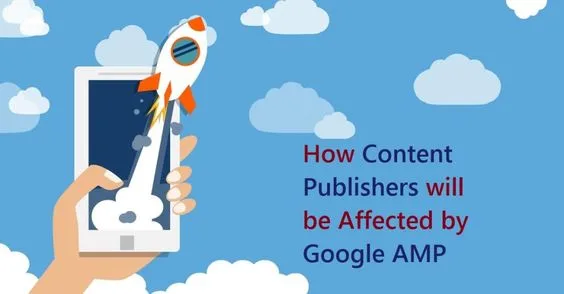
Summary: With the rise of Google AMP, developers and content publishers have to make slight changes to their work so that they aren’t affected. Here’s what they need to know.
Reading duration: 5 mins
Who is it for: Content marketers, online marketers, content writers, and webmasters
Ever since the Google AMP (Accelerated Mobile Pages) project was launched, publishers from all around the globe have been talking about it. While many of them have already given it a try, some are still unsure what AMP is all about and how does it affect their websites. If you are one such site owner with limited information about AMP and its benefits, then this blog is just for you.
What Is Google AMP?
Google AMP or Accelerated Mobile Pages is an extension of Google’s growing focus on mobile first approach. According to Google as well as all the SEO experts, loading speed is one of the very crucial factors when it comes to ranking of a website. AMP is a slightly new project directed in the same direction and is likely to have long-lasting effects of content publishers and internet marketers who don’t adhere to Google’s guidelines regarding website speed.
What is in it for you?
AMP enables site owners to streamline their content templates with AMP HTML, an open source framework to simplify CSS, HTML and JS elements. As a result of this, whenever a user searches for any query, Google shows only the most vital content (images, text, videos and ads) from the websites.
According to Google, those websites that enable accelerated mobile pages experience on an average 15 to 85% performance enhancement. Moreover, they are given first preference in the search results. As soon as a user clicks on the AMP-compliant websites, the entire content gets loaded very quickly, offering a best in class browsing experience to viewers.
In an attempt to enhance the overall user experience, Google also provides a blue bar at the top of the website, which can be used to return to the Google results without any hassle.
AMP’s Impact On Organic Search & Publishers
AMP is Google’s in-house project, which enables it to serve viewers in an efficient manner. It’s the sole reason why you won’t see AMP going down ever. In the current scenario, the only option that publishers are left with is to make their sites fast or else be ready to face the consequences.
After the AMP’s debut, all the sites which have opted for the AMP HTML get first preference in the search results.
For those who don’t have AMP enabled yet, it will mean lack of impressions (thereby clicks) on their content pages. As a direct impact, the sites without AMP HTML have started experiencing a drop in the organic traffic as well as the average revenue they were able to generate before AMP came into existence.
What can content writers do to AMPlify your content?
A professional content writing company can help you develop mobile-friendly content that serves AMP needs well. This means no long-winding text, but crisp and concise content that can be consumed on the small mobile screen without much problem.
While developers would need to tweak their knowledge to include AMP into their scheme of things, the same will be true for content writers too. They would also need to be aware of the new HTML tags like amp-anim and amp-img (the ‘alt’ attribute will require you to develop alternate text if an image fails to load).
Conclusion
If your website does the heavy lifting of driving revenues from it, then it will be a wise move for business owners and bloggers to have long-term plans regarding your web property. One way to do this will be to optimize the site’s speed along with other major SEO components.
The simple formula is this –
The slower your site loads, the more difficult will it become
for you to attract organic traffic from Google.
So, opt for AMP as soon as possible to avoid decrease in Google ranking signals and subsequent loss of visibility among your target audience.