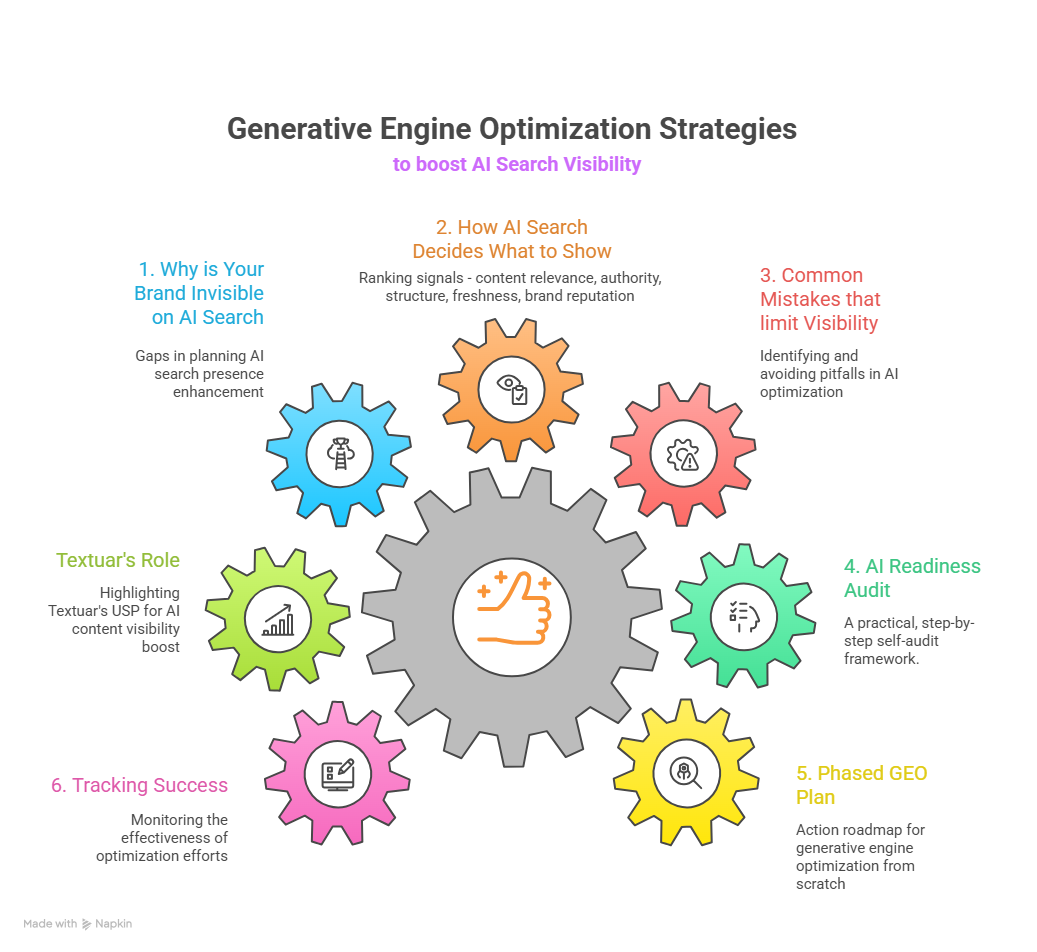

📌 TL;DR Summary- What is Covered?
SEO for attorneys is the process of optimizing a law firm’s website, content, and local presence so potential clients can find, trust, and contact the firm through search engines and AI-powered platforms. It focuses on ranking for high-intent legal searches, appearing in local results, and being cited in answer engines like Google AI Overviews and ChatGPT.
Law firms that rank well focus on high-value legal keywords, strong on-page optimization, and local SEO that captures nearby, ready-to-hire clients. Modern legal SEO also requires optimizing content for AI Overviews and answer engines like ChatGPT through clear structure, FAQs, and credibility signals.
When done right, SEO delivers long-term, high-quality leads that outperform short-term ads and keep your firm discoverable as search continues to evolve.
If you are an attorney, you already know the pattern. A potential client has a problem, they Google it, they scan a few results, and then they call the firm that feels credible, nearby, and confident.
This is the time when SEO for attorneys needs to work in your law firm’s favor and propel your presence on search results page.
And the rules keep shifting. Google’s AI Overviews now summarize answers at the top of results in many countries, and search is moving toward “answer engines” that don’t always require a click. That doesn’t make SEO irrelevant. It makes it more demanding. Your firm needs to be the source the algorithm trusts.
This guide walks you through a practical, modern SEO strategy built for law firms: keywords, on-page improvements, local SEO, technical cleanup, content that builds authority, and how to optimize for AI-powered search without chasing gimmicks.
What Is SEO for Attorneys?
SEO for attorneys is the process of improving your law firm’s visibility in organic search results so more qualified prospects find you when they search for help.
Attorney SEO is different from typical small-business SEO because:
- Legal is a high-trust, high-stakes category (often treated as “Your Money or Your Life” style content).
- Clients search with strong intent: “car accident lawyer near me,” “how to file for divorce,” “can I expunge a misdemeanor,” etc.
- Competition is brutal in many cities, and the winners usually have the best mix of authority + local trust signals + helpful content.
You can run ads, but SEO creates a long-term pipeline of traffic that doesn’t shut off the moment you pause ad spend. This way, SEO delivers outcomes long after ads have stopped.
Why SEO Is Critical for Law Firms Today
Law firm SEO used to be mostly about ranking a few practice pages and collecting backlinks. That still matters, but, in 2026, you are also competing with:
- AI Overviews that answer questions directly on the results page
- Frequent algorithm improvements focused on surfacing “relevant, satisfying content” rather than pages written for rankings.
- Higher expectations around credibility for sensitive topics (including legal guidance) in the quality rater guidelines.
If your firm’s content looks thin, generic, outdated, or overly salesy, it won’t benefit your law firm at all. It will struggle to earn trust and rank well on traditional searches or AI search.
Now let us move to the interesting aspect. You will see how we optimize with targeted SEO for attorneys.
1. Keyword Research for Attorneys: Find “Client-Ready” Searches
Keyword research for law firms isn’t about collecting a giant list. It’s about identifying the exact searches that signal this person might hire you.
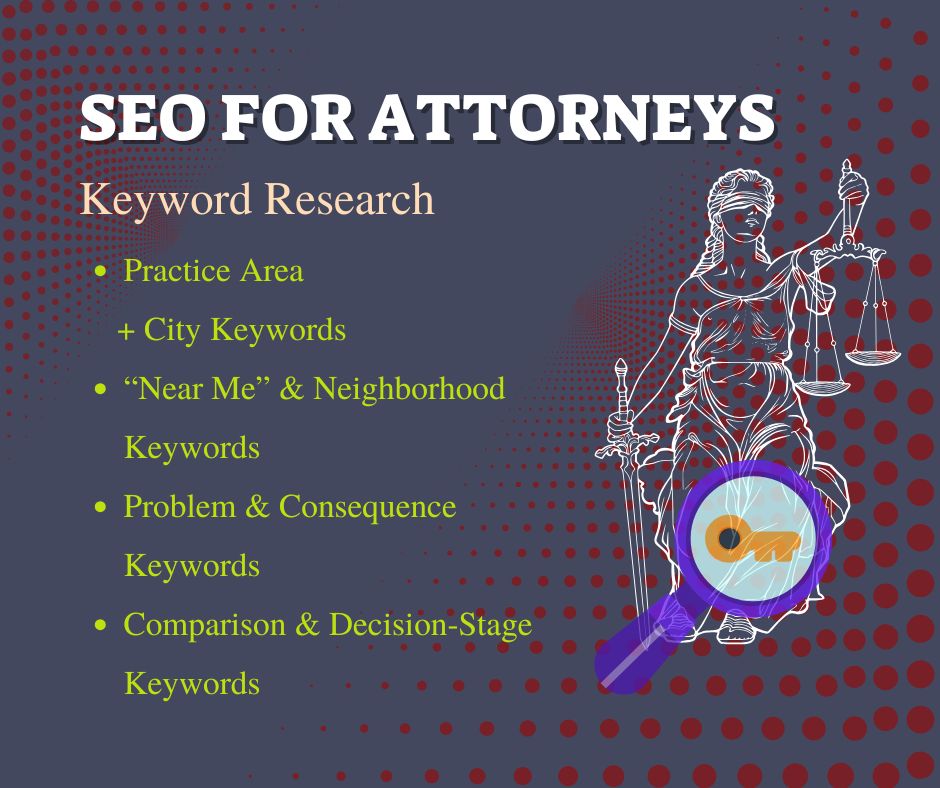
Focus on 4 keyword types
| Keyword Type | What It Targets | Examples | Why It Matters for Attorneys |
| Practice Area + City Keywords | Users actively looking to hire a lawyer in a specific location | “Personal injury lawyer in Miami” | These keywords show high commercial intent and usually drive consultation-ready leads. They are essential for practice area pages and local SEO visibility. |
| “Estate planning attorney Austin” | |||
| “Near Me” & Neighborhood Keywords | Mobile and hyper-local searches | “DUI lawyer near me” | Google prioritizes these searches in the local pack and Maps, making them critical for firms that rely on nearby clients. |
| “Immigration lawyer downtown Chicago” | |||
| Problem & Consequence Keywords | Users researching legal consequences or next steps | “What happens after a hit and run” | These keywords attract users early in the decision cycle and help build trust, authority, and visibility in AI Overviews. |
| “How much is child support in California” | |||
| Comparison & Decision-Stage Keywords | Users close to choosing a lawyer | “Best workers’ comp lawyer” | These searches signal strong hiring intent and work well for detailed service pages, FAQs, and conversion-focused content. |
| “Settlement timeline for rear-end accident” |
Map keywords to the right page type
- Practice area pages → hire intent (calls and consult forms)
- FAQ / blog pages → education + pre-intent (builds authority and feeds AI Overviews)
- Local pages → location intent (Maps + local pack visibility)
A simple rule: if a keyword includes a service and a location, build a strong service page for it. If it’s a question, build a clear, helpful answer page.
2. On-Page SEO for Attorney Websites: The Non-Negotiables
On-page SEO is what you control directly. But it is also where most firms leak rankings because the site is vague, repetitive, or poorly structured.
What to fix here
| Area to Fix | What to Check | Best Practice | Common Mistake to Avoid |
| Title Tags (Page Titles) | Service and location included, character length, readability | Use clear service + city phrasing that reads naturally and matches search intent | Keyword stuffing or vague titles like “Home” or “Legal Services” |
| Headings (H1–H3) | One H1 per page, logical hierarchy, question-based subheadings | Structure pages with client-focused questions and clear topic flow | Multiple H1s or headings written only for keywords |
| Practice Area Pages | Depth, clarity, and relevance to real client concerns | Explain the process, timelines, costs, and next steps in plain language | Thin, generic content that sounds copied or overly promotional |
| Internal Linking | Links between blogs, service pages, and FAQs | Guide users from informational content to relevant services naturally | Orphan pages with no internal links |
| Image Optimization | Alt text accuracy and accessibility | Write descriptive alt text that improves accessibility and context | Stuffing keywords into alt text or leaving it blank |
3. Optimizing for Answer Engines Like ChatGPT and AI Overviews
This is the shift you can’t ignore.
Google’s AI Overviews now appear broadly and are designed to provide a snapshot with links to sources. Google has also publicly expanded documentation around AI features and guidance for using generative AI content responsibly.
What does that mean for a law firm?
It means your content needs to be the kind that:
- answers questions clearly,
- shows expertise,
- cites realities (statutes, timelines, court processes) carefully,
- and looks trustworthy enough to reference.
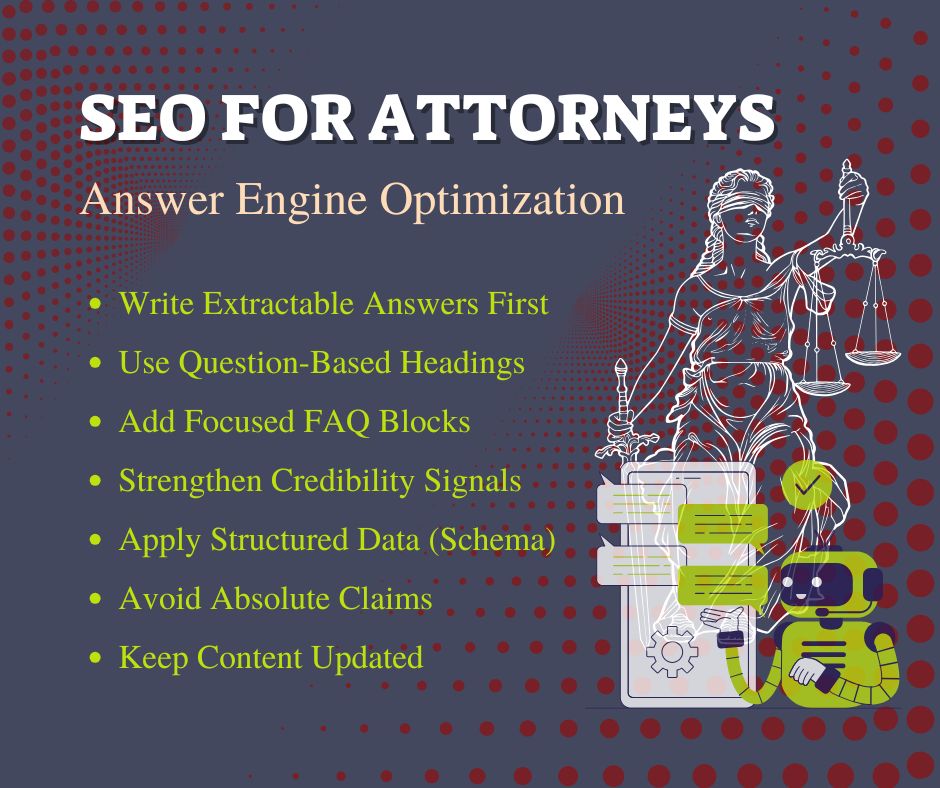
Practical AEO (Answer Engine Optimization) tactics for attorneys
| AEO Tactic | What to Do | Why It Works for AI & Search | Where to Apply It |
| Write Extractable Answers First | Start key sections with a direct 1–2 sentence answer before expanding | AI systems prefer concise, self-contained answers they can summarize or cite | Blogs, FAQs, practice area pages |
| Use Question-Based Headings | Turn real client questions into H2 or H3 headings | Makes it easier for AI and Google to match content to natural-language queries | Blog posts, service pages |
| Add Focused FAQ Blocks | Include short, clear FAQs that address high-intent questions | FAQs are commonly used in AI Overviews and featured snippets | Service pages, local pages |
| Strengthen Credibility Signals | Show attorney names, credentials, review dates, and firm details | Legal content requires strong trust indicators for AI citation | Blog footers, author boxes |
| Apply Structured Data (Schema) | Use FAQ, LegalService, and LocalBusiness schema accurately | Helps search engines understand content structure and relevance | FAQs, firm pages |
| Avoid Absolute Claims | Use careful, jurisdiction-specific language and disclaimers | AI favors responsible, non-misleading content in legal topics | All legal content |
| Keep Content Updated | Review and refresh content when laws or procedures change | Fresh, accurate content improves reliability and AI trust | Core practice pages, blogs |
4. Local SEO Strategies for Attorneys (The Fastest ROI)
For most law firms, local SEO drives the highest-intent leads. People don’t want “a lawyer.” They want a lawyer near them.
Your local SEO checklist
| Local SEO Element | What to Optimize | Best Practice | Why It Matters |
| Google Business Profile (GBP) | Categories, services, hours, photos, posts | Use accurate primary categories, real office photos, and consistent updates | Strong GBP profiles improve visibility in the local pack and Maps |
| NAP Consistency | Firm name, address, phone number | Keep NAP identical across website, directories, and profiles | Inconsistencies weaken trust and local ranking signals |
| Client Reviews | Review volume, recency, and responses | Encourage ethical reviews and respond professionally to all feedback | Reviews influence both rankings and client decision-making |
| Legal Directories & Citations | Listings on legal and local directories | Maintain accurate, up-to-date profiles on trusted platforms | Citations validate your firm’s legitimacy and location |
| Local Landing Pages | City- or area-specific service pages | Create unique, useful pages for each service area | Helps rank for location-based searches beyond the main office city |
| Q&A and Posts on GBP | Questions, updates, announcements | Answer common questions and post helpful updates regularly | Improves engagement and relevance signals |
| Location Signals on Website | Address, map, contact details | Display clear location info in the footer and contact page | Reinforces local relevance for search engines and users |
5. Technical SEO Essentials for Law Firms
Technical SEO helps improve the technical aspects of your site. If your site is slow, broken, or confusing, you will struggle, especially on mobile.
Priorities:
- Mobile-first experience (most legal searches happen on phones)
- Fast load time (improves UX and performance signals)
- Secure HTTPS
- Clean site architecture (services easy to find in 1–2 clicks)
- Indexing basics (proper sitemap, no accidental noindex tags)
If you’re not sure what’s wrong, Google Search Console is usually the first place to look. If rankings or traffic drop unexpectedly, it helps identify why. It shows indexing errors, manual actions, mobile usability issues, page experience problems, and keyword queries losing visibility. Reviewing these reports first helps attorneys spot technical or content-related issues before investing time or money in broader SEO fixes.
6. Content Strategy & Authority Building for Attorneys
Here’s the truth: legal SEO is content-heavy because legal trust is earned.
Google’s guidance emphasizes “helpful, reliable, people-first content.”
And in recent core updates, Google continues to frame improvements around surfacing relevant, satisfying results rather than rewarding SEO tricks.
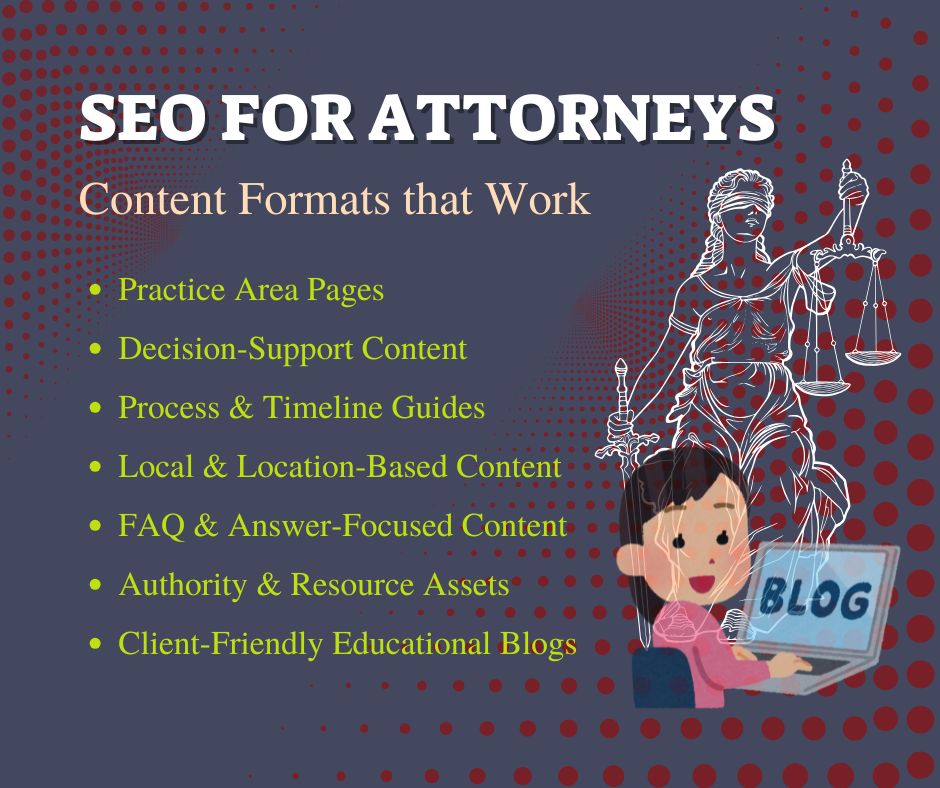
Content types that work for law firms
| Content Type | What It Includes | Primary Goal | Why It Works for Attorneys |
| Practice Area Pages | Services offered, process overview, timelines, FAQs, next steps | Drive consultations and calls | These pages capture high-intent searches and act as the firm’s main conversion assets |
| Decision-Support Content | “Do I need a lawyer?” guides, settlement considerations, legal options | Build trust and reduce hesitation | Helps prospects understand when legal help is necessary, increasing conversion confidence |
| Process & Timeline Guides | Step-by-step explanations of legal procedures | Set expectations and educate | Reduces anxiety and positions the firm as transparent and client-focused |
| Local & Location-Based Content | City-specific guides, local laws, courthouse insights | Win local search visibility | Improves rankings for geo-intent keywords and strengthens local relevance |
| FAQ & Answer-Focused Content | Short, direct answers to common legal questions | Appear in AI Overviews and snippets | Well-structured FAQs are favored by answer engines and voice search |
| Authority & Resource Assets | Checklists, downloadable guides, legal resources | Establish expertise and authority | Long-form resources support E-E-A-T and attract backlinks naturally |
| Client-Friendly Educational Blogs | Plain-English explanations of legal concepts | Attract early-stage prospects | Positions the firm as helpful and approachable before the first consultation |
7. Measuring SEO Success for Attorneys
| Metric | What to Measure | Why It Matters | How to Track It |
| Organic Traffic | Visits from search engines to your website | Shows overall SEO visibility and growth | Google Analytics, Search Console |
| Keyword Rankings | Position of target legal keywords in search results | Indicates competitiveness and content effectiveness | Rank tracking tools, Search Console |
| Local Pack Visibility | Presence in Google Maps and local results | Drives high-intent local leads | Google Business Profile Insights |
| Click-Through Rate (CTR) | Percentage of users who click after seeing your listing | Reflects title and meta description effectiveness | Google Search Console |
| Leads & Conversions | Calls, form submissions, chat enquiries | Measures real business impact | Analytics goals, call tracking |
| Lead Quality | Relevance of enquiries to practice areas and location | Filters out low-value traffic | CRM or intake tracking |
| Page Engagement | Time on page, scroll depth, bounce rate | Indicates content usefulness and clarity | Google Analytics |
| Review Growth | Volume and recency of client reviews | Strengthens trust and local SEO signals | Google Business Profile |
| Technical Health | Site speed, mobile usability, indexing issues | Ensures search engines can crawl and rank pages properly | Search Console, PageSpeed Insights |
Why Hire Textuar for SEO for Attorneys
Attorney SEO needs to meet the triple goal of trust, compliance, and conversion. This is exactly where most generic SEO agencies fall short.
At Textuar, we approach SEO for attorneys as a content-led authority play, built for both classic Google results and AI-powered discovery. Here are some reasons why we are ideal for your law firm’s online marketing success:
-
Legal-Focused SEO Strategy
We understand how attorney SEO differs from generic marketing. Our strategies align with legal search intent, ethical advertising norms, and high-value case acquisition, helping your firm attract qualified prospects instead of low-quality traffic.
-
Content-Led Authority Building
Textuar prioritizes authoritative, people-first content that educates and reassures potential clients. We create practice pages and blogs that demonstrate expertise, answer real legal questions, and support long-term rankings and trust.
-
AI & Answer Engine Optimization Expertise
We structure content to perform in AI Overviews and answer engines like ChatGPT by using extractable answers, clear FAQs, and credibility signals, ensuring your firm stays visible as search behavior shifts toward AI-driven discovery.
-
Local SEO for Attorneys That Converts
Our local SEO approach goes beyond listings. We optimize Google Business Profiles, location pages, and reviews to improve local pack visibility while focusing on converting nearby searchers into consultation-ready leads.
-
Transparent Reporting & Measurable Outcomes
We track metrics that matter to law firms, including calls, form submissions, and lead quality. With clear reporting and ongoing optimization, you always know how SEO contributes to real case enquiries and growth.
To conclude
SEO for attorneys is not a one-time project but is a carefully-curated system meant for success. You build a credible site, publish content that answers real client questions, optimize for local visibility, and keep improving. And now, you do it with AI search in mind too, because the firms that get cited and surfaced in answer engines will own attention before the click even happens.
If your firm wants more consistent cases from organic search without risky shortcuts, then connecting with Textuar will deliver rewarding outcomes for your law firm. Talk to our SEO services experts today to get started.
FAQs: SEO for Attorneys
Q1- How long does SEO take to work for attorneys?
Most firms see early movement in 6–12 weeks, but meaningful lead growth usually takes 3–6 months. Competitive markets can take longer. SEO is cumulative. The firms that win keep publishing, improving, and building trust signals.
Q2- Can law firms rank in ChatGPT and AI Overviews?
You can’t “force” inclusion, but you can significantly improve your chances by publishing clear, authoritative answers, strengthening credibility signals, and structuring content properly. AI Overviews are designed to provide summaries with links to sources, so being a reliable source matters for your law firm.
Q3- Is local SEO more important than national SEO for attorneys?
For most practices, yes. Most legal clients hire within their area, so the local pack (Maps) and location-intent searches often drive the highest-quality leads.
Q4- What type of content attracts legal clients organically?
Great options in content formats for legal SEO include:
- high-quality practice pages,
- “what to do next” guides,
- FAQs that match real client questions,
- local resources and process explainers.
Legal SEO content that reduces anxiety and increases clarity helps in engagement and conversion for your legal firm.
Q5- How often should attorneys publish blog content?
A realistic goal is 6 to 8 high-quality posts per month, plus quarterly updates to your core practice pages. But you should remember that consistency beats volume. Also, you should factor in updates in the IPC codes because laws and procedures change.
Q6- Do backlinks still matter for attorney SEO?
Yes. Quality backlinks still help, especially in competitive legal niches. But content and trust signals have to hold up. Links won’t save a weak site after core updates that reward satisfying, reliable content.
Q7- Can small law firms compete with large firms using SEO?
Absolutely. Big budgets don’t automatically create trust. Smaller firms can win by focusing on:
- tighter practice specialization,
- deeper local relevance,
- better content that answers real questions,
- stronger review velocity and GBP performance.