9 E-commerce Product Description Mistakes That Shoppers Hate
A good e-commerce product description does wonders. When a buyer thinks of purchasing an item, what you say about your

A good e-commerce product description does wonders. When a buyer thinks of purchasing an item, what you say about your

Are you an e-commerce business owner? Then you must know how crucial it is to write informative and engaging product
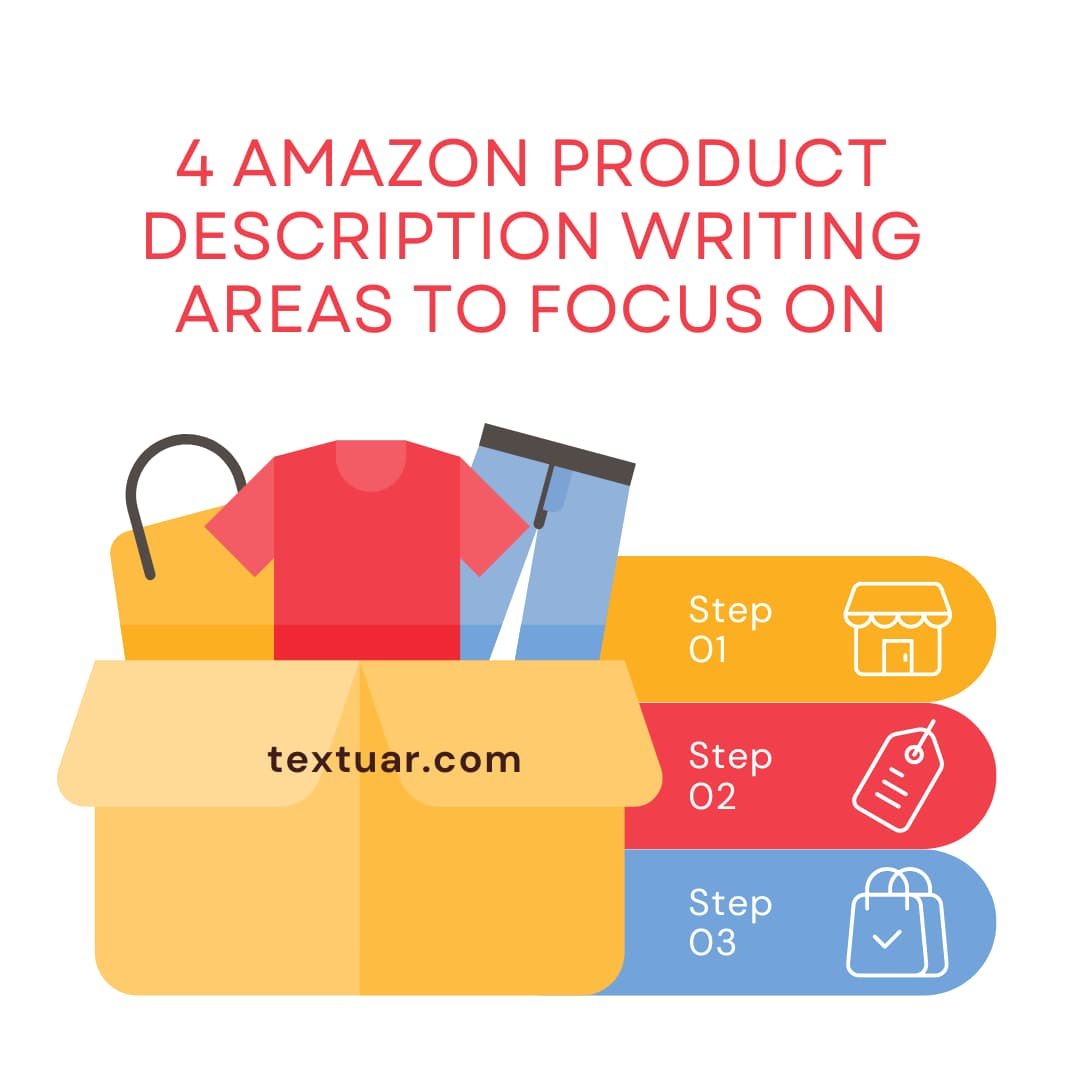
Today, Amazon retails 75.1 million products – easily making it one of the biggest e-commerce sites in the world. As

Great e-commerce product descriptions blend clarity, emotion, and SEO to turn browsers into buyers. They highlight benefits, use sensory language, and build trust with social proof. Avoid dull or copied content—focus on storytelling that connects with your audience. Future trends like AI tools and personalization make product descriptions more dynamic, persuasive, and performance-driven. Textuar can help write AEO and SEO optimized descriptions.
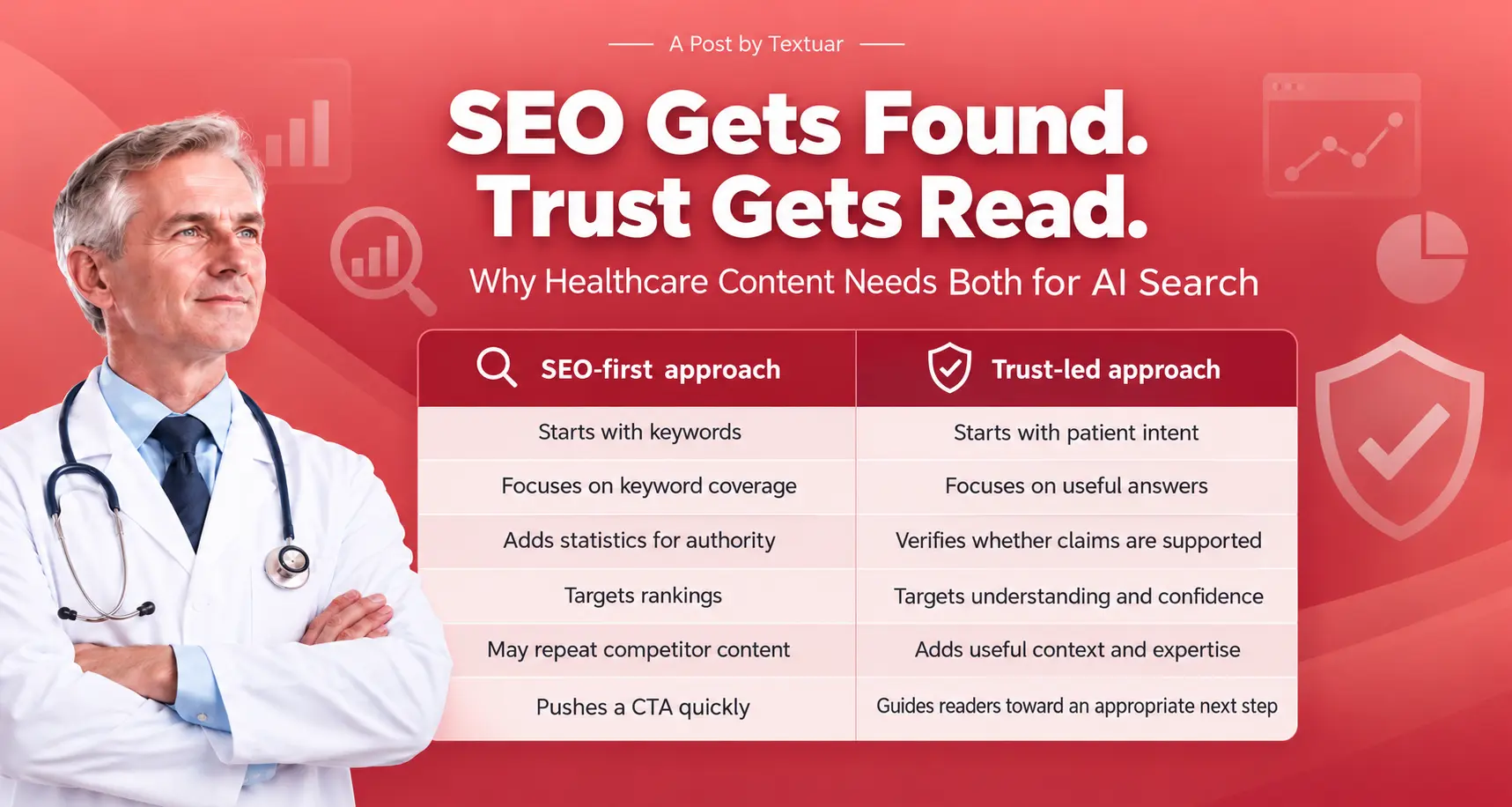
Summary: SEO alone cannot make Healthcare content trustworthy. To rank and command reader trust in AI searches, healthcare content must be accurate and have well sourced information. It should demonstrate medical review and provide clear answers. Also, it should include E-E-A-T elements like readability and credibility. These elements in healthcare content writing services uplift trust with patients as they find the information to be accurate and useful.
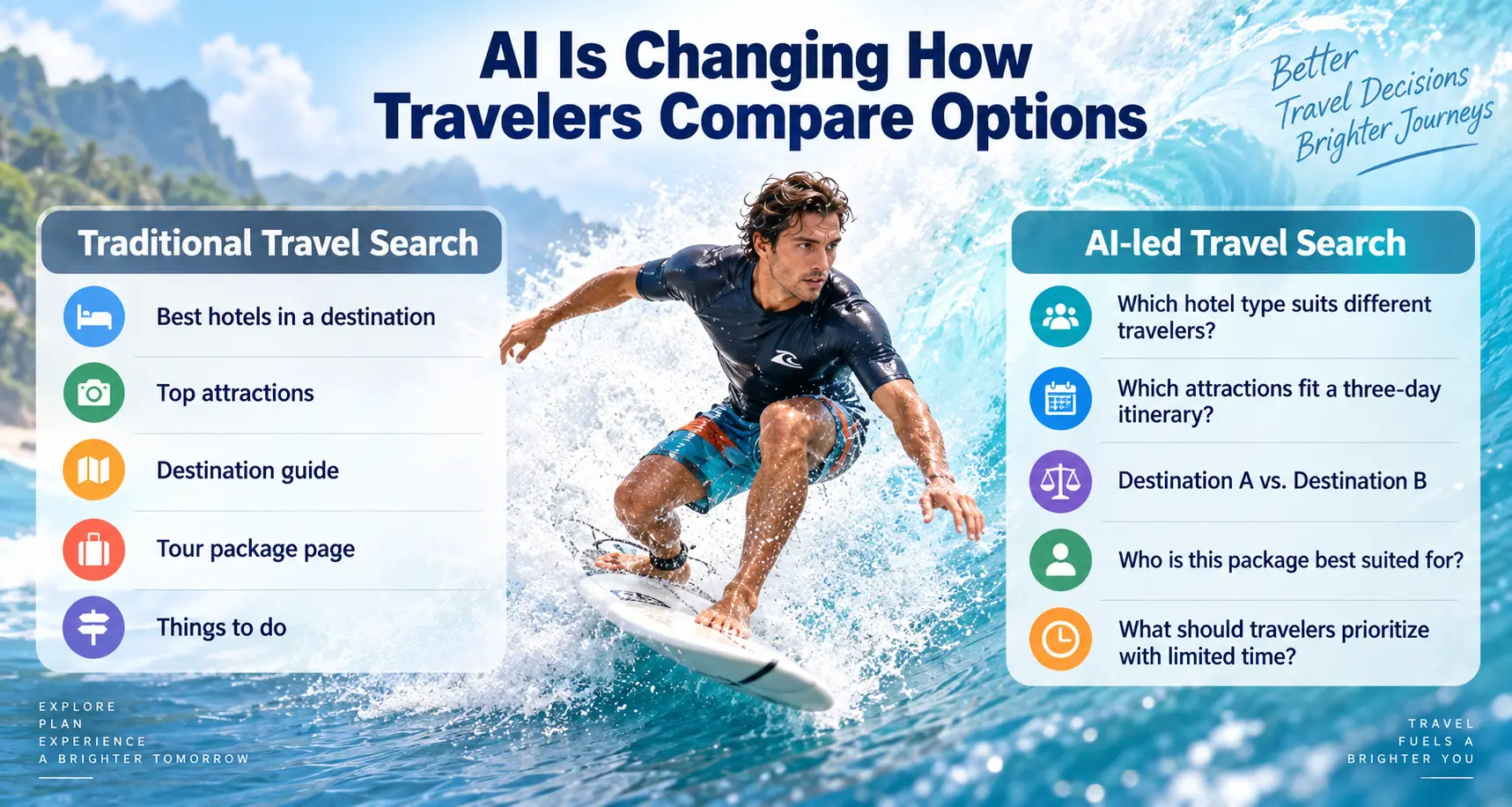
AI is changing travel planning by helping travelers research destinations, compare options and build personalized itineraries. Instead of moving between dozens of websites, travelers can now ask detailed questions and refine their plans conversationally. This means that travel companies must use a travel content writer so that their content is valuable to search engines and to AI-driven discovery tools like ChatGPT, Claude and AI Overviews.
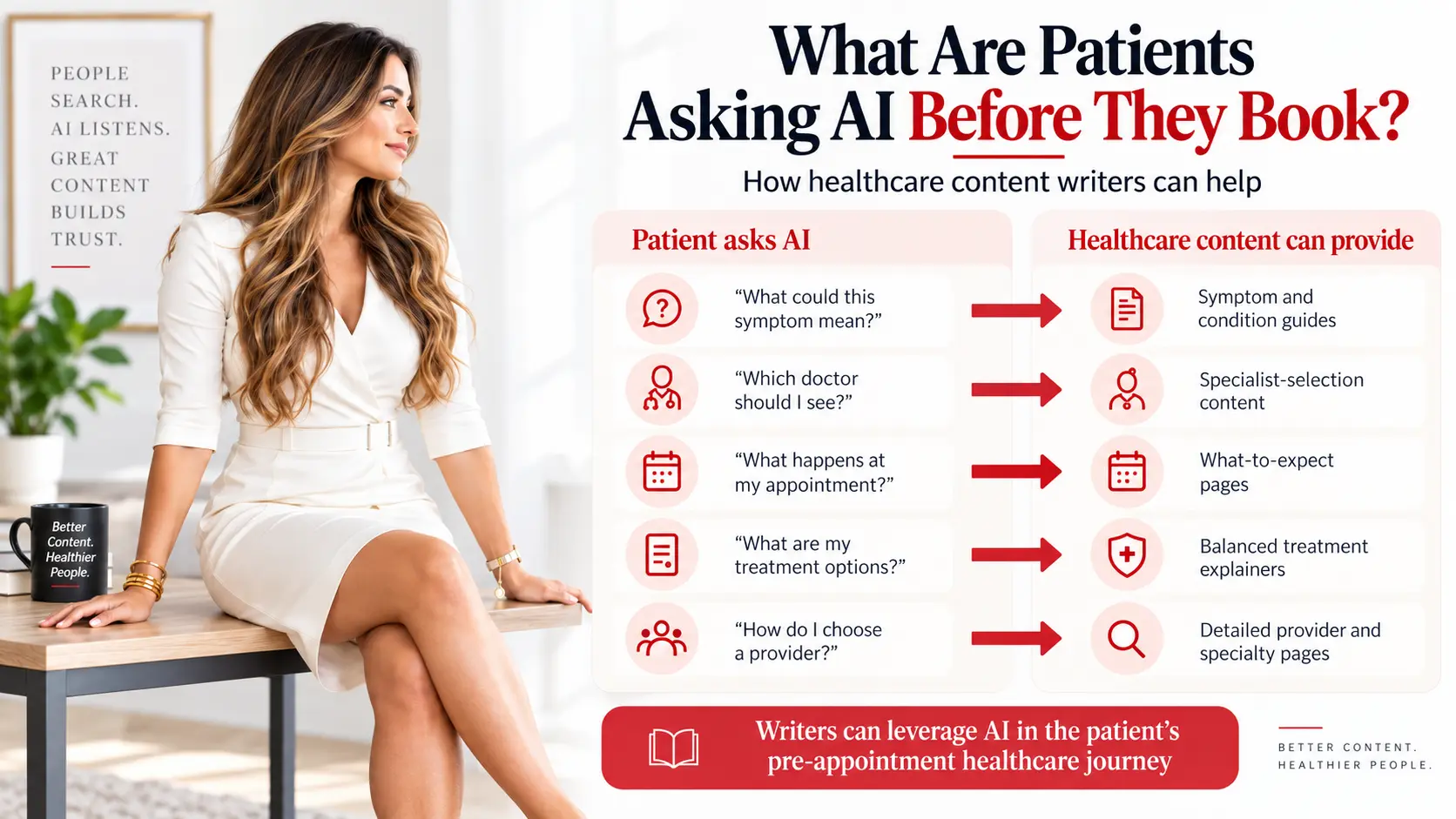
Patients now ask AI about symptoms, specialists, tests, costs, and urgency before booking. Healthcare content must answer these questions early to build trust and visibility. A skilled healthcare content writer creates question-led, accurate content that guides patients from research to appointment without replacing clinical judgment.

Often, real estate buyers may hesitate before investing in properties. Real estate writers can help developers, brokers and builders, to:
– educate buyers about the market,
– equip them with deeper insights into their choices,
– ease their uncertainties, and
– enable them to make more informed decisions.
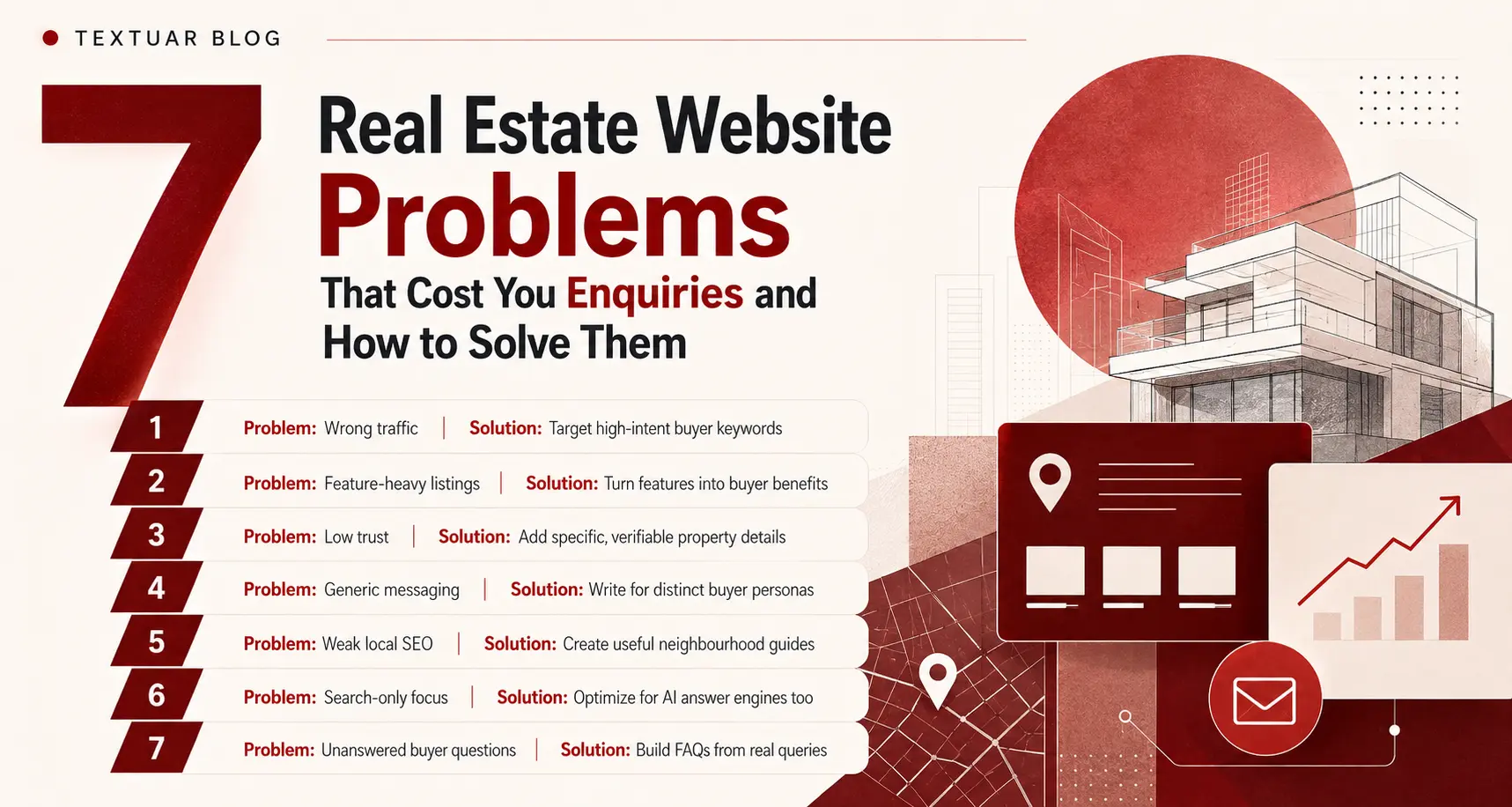
TL;DR Summary
– Traffic alone does not generate property enquiries if your website is not optimized by a real estate content writer.
-Focus on buyer-specific, benefit-driven, and locally relevant content to support decision journey.
-Strong real estate content should clearly show relevance, credibility, and the next action.