Last updated on December 6th, 2025
📌 TL;DR – Quick Summary
AI-generated content often lacks emotional depth, authentic voice, and audience engagement—traits that hinder reader connection and even search visibility.
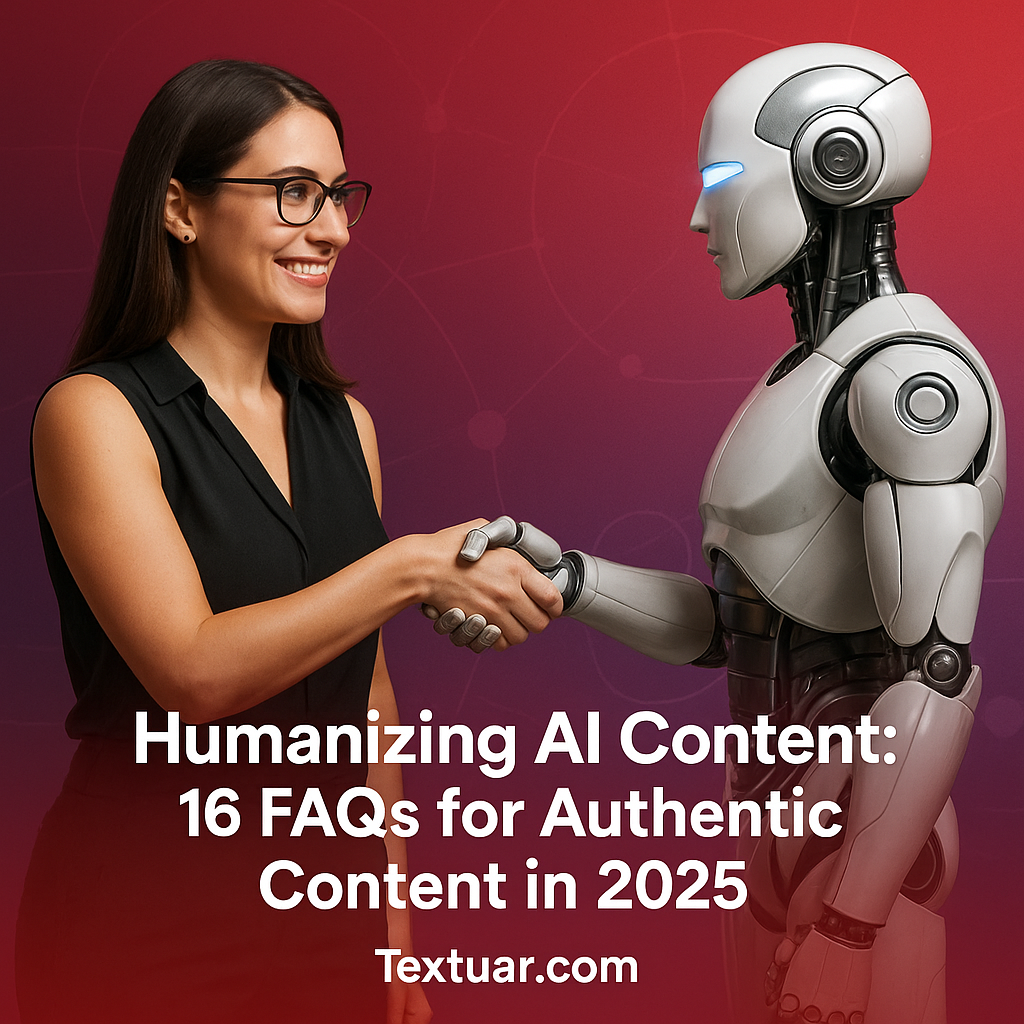
The post addresses some FAQs on the topic “Humanizing AI Content” offering insights on why adding human elements (like storytelling, tone shifts, and nuance) improves resonance, avoids SEO pitfalls, and makes content feel genuine in an AI-first era.
2026 has seen AI writing tools go mainstream. But what does that mean for marketers like you and me? To put it bluntly – “A lot!” It is true that these technologies offer speed and scale, but they also pose a new problem: how do you make AI-generated content sound humanly authentic?
That is an interesting insight worth thinking about.
What is Humanizing of AI Content
Pure AI content just cannot resonate with human readers or search engines. It lacks the emotion, individual perspective and authentic voice that readers want to read.
Google’s algorithms are becoming gradually more advanced at spotting whether content is robotic or of dubious value. Hence, it may punish things that don’t provide genuine benefits. This is why blindly using AI drafts is not a feasible solution.
But here’s an opportunity. You can try humanizing AI content effectively.
This means that you can keep the speed and efficiency of AI but add in that authenticity and engagement that only human experience can provide.
As a content marketer, you shouldn’t worry about using one of the two. Rather, you need to achieve a successful synergy between the two.
Experts like Leah Bowden (Content design lead at Lloyds Banking) say, “Humanizing AI content means making what you say relatable for people.”
So, if you are a content marketer grappling with scale, a business owner wanting to boost engagement, or a writer getting to grips with new technologies, learning how to humanize AI content is now a necessary skill.
The following 16 frequently asked questions address the main aspects of this process: from finding weak points in AI and using proven humanization strategies so as to get real results.
FAQ – Humanizing AI Content
With AI’s entry, why is it still important to have human-written content?
Only human writers possess the adaptability, authenticity, and emotional resonance visible in content. AI cannot match these qualities. While AI can churn out text after text in quick succession, humans understand nuances of context and audience psychology.
They can write content that makes genuine connections and shows real expertise as per EEAT protocols. Only human writers can forge genuinely new content and ideas.
What are the main problems with using AI content alone?
AI copy may look okay at first glance, but people soon lose interest because it falls flat fast. AI produces biases and factual errors which search engines notice. Also, its formal style makes readers feel alienated.
As AI is unable to generate genuinely new ideas, it may inadvertently commit plagiarism. Without human input, AI work often ends up sounding robotic and doesn’t inspire any emotional involvement from the reader.
How do I uncover weaknesses in AI-generated content?
You should look for repetitive sentence structures and general phrases. They indicate the shallow style of AI writing. Also, you can check whether the work contains factual errors or if it has a fixed robotic language pattern.
AI work frequently lacks the personal touch and may fail to address the audience’s query in any meaningful way. You can use tools like Hemingway to assess readability and identify monotonous flow.
What is the 30% human editing principle in SEO?
This rule mandates that human editing alone should account for at least 30% of AI-generated text produced, in an effort to avoid search engine penalties.
The human editors can do these tasks to
-add personal anecdotes,
-integrate unique perspectives,
-add data, numbers, and stats,
-restructuring fragmented sentences,
-infusing fresh content from original research
This kind of editing depth helps the content pass AI detection tools and maintains authenticity when humanizing AI content.

How can I add emotion to AI-generated content?
You can add a touch of uniquely personal angles to your narratives. Many copywriters add sensory details and showcase personal experience with the topic as well. This goes a long way in humanizing AI content.
Next, you can try to replace general sentences with concrete examples that readers can easily understand. Also, it is wise to write in an easy, conversational way and talk directly to your audience. Share with them your moments of human weakness.
What are Google’s EEAT guidelines? And how do they matter when humanizing AI content?
EEAT stands for Experience, Expertise, Authoritativeness, and Trustworthiness. It represents Google’s scale for evaluating the quality of content. It indicates first-hand experience of the product discussed in the content. Also, detailed knowledge (with in-depth blogs) showcases authority about the subject.
When you cite a credible source, you build authority for the content. Lastly, accuracy and factual correctness denote trust. Do what the EEAT guidelines tell you, and your content will rise in search rankings as well as be considered to be more reliable.
Which tools are the most effective for giving AI content the human touch?
Grammarly works quite well in removing grammar mistakes and typos in the AI content. I also find Hemingway Editor pretty useful in detecting ‘difficult to read’ sentences that come from GPT tools. Both tools are helpful in improving readability.
You can remove the robotic language and add a human essence by paraphrasing parts of sentences with QuillBot. It helps with rephrasing and toning up prose. ChatGPT can also help with conversational rewrites. Combine these tools with human creativity for humanizing AI content.
What can I do to avoid being penalized by Google for using AI content?
You should focus on actual human editing without a shallow, cursory glance. Also, try to do fact-checking and add original insights to strengthen the human essence in content. It is good to avoid phrases produced by algorithms and get rid of possible repetitive structures.
Genuine value and unique viewpoints in the content appeal to readers and LLMs for building AI-generated responses. Together, this can ensure that your content is authentic and passes the strict Google algorithm checks for punishing shallow AI content.
What separates human-sounding content from AI-generated content?
Humanizing AI content builds structured sentences without fragmentation. It shows individual experiences and carries emotional depth. The conversational tone further amplifies the human essence and removes AI signals from content.
You can integrate specific examples, cultural metaphors, and deliberate word choices. Human writers come up with smooth transitions between apparently separate ideas and thoughts flow naturally. A sort of vulnerability and genuine personality in the content separates quality content from AI output.
How does humanizing AI content combine knowledge and relatability?
To meet this goal, you may use simple analogies and actual examples to articulate complex information. Another good idea is to embed professional insights in personal stories and common challenges.
With conversational tone and everyday words, you can avoid the lofty tones of speech found in AI content. This way, you can use simplified language for beginner readers and technical oriented content for experts.
What are some of the most typical AI words and phrases to avoid when writing content?
Words in common AI usage include ‘delve’ or ‘game changer.’ Even ‘seamless’, ‘embark’, and ‘leverage’ denote AI-written content. Instead, try to use words that you would use when speaking face-to-face with a friend. This type of language will be better received by your target readers.
How can I produce quality content at scale?
It is better to use checklists and a stringent quality evaluation process when producing content at scale. You can build a team of editors and fact-checkers for better results.
Another good idea in humanizing AI content is to ensure ongoing training on humanizing content along with continuous feedback loops. This will help you ensure consistently high quality across mass-produced content.

What ethical issues should I bear in mind when it comes to AI-powered content creation?
You can ensure that any AI content creation is marked clearly as such. Also, you need to cross-check the facts to get the double benefit of credible content and no misinformation in it.
Respect intellectual property rights and do not steal someone else’s work or idea without adding significant original value yourself. Lastly, when writing content, you need to give priority to the reader over search engines or generative engines.
How to use storytelling techniques to make AI content more interesting?
For this, you can strengthen narratives with clear beginnings, conflicts, and resolutions instead of plain, boring text. You may think about adding customer success stories and case studies for humanizing AI content.
Also, make up relatable characters or situations that illustrate your points. Another great idea is to incorporate sensory description and emotional progress.
Many smart content writers add a great opening hook, followed by a compelling body section that both continually builds tension and shows a helpful tone for resolving customer problems. End it with a satisfying conclusion.
How do I review AI content?
A good measure of QC is to cross-check AI claims with several authoritative sources. These may include academic journals, government databases and industry reports. Also, you can verify statistics with original research or recent published reports.
Quotes of experts should be checked for their accuracy and credited appropriately. Use fact-checking websites for those topics that are inclined to kick up controversy. When in doubt, you may think about turning to those experts in the field you trust.
How can I ensure a consistent brand voice when humanizing AI content?
Here, you can take a few steps. Write detailed instructions for brand voice, including tone, personality traits, and language preferences. Create a style guide with approved phrases that must be avoided and patterns of communication.
Another smart move would be to look for successful content in your area for inspiration. Practice writing in your brand voice often and seek feedback from team members to gain mastery in humanizing AI content.
To Conclude
The future of content creation is neither artificial intelligence nor human creativity in silos. Rather, you need a smart synergy between the two.
As we have explored in asking the above 16 questions, to humanize AI content means taking a strategic start far beyond simple editing of text.
The best content creators are the ones who understand AI can be an impactful starting point, not the eventual destination. They use AI to overcome writer’s block and speed up content publishing. But they also make sure to add truly human insights that give it authenticity and emotional depth that simply can’t be automated.
Remember, the goal is not to trick readers or search engines into believing your content is entirely human-made.
Experts like Elyse Dunbar from Optimizely concur that it is all about publishing content that genuinely serves and benefits your audience, whether AI-assisted or otherwise.
After all, honesty with substantial human input builds trust and authority.
Now begins your journey to making more human, more effective content. Take this information, try out the methods, and see how your own contributions turn from robotic text into human narratives that actually produce real results for your company.
Connect with us at Textuar to get compelling and engaging content that moves the needle in reader engagement and higher conversions.