


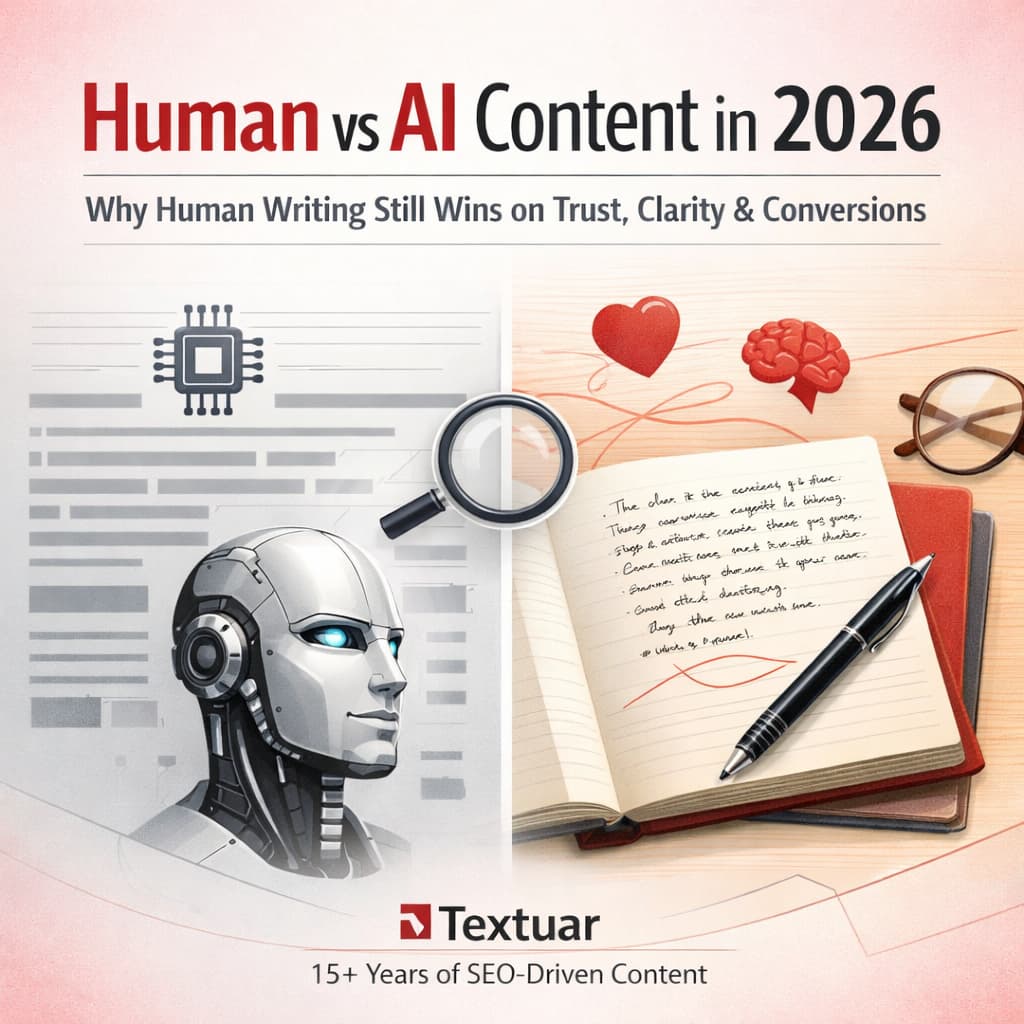
Why Human Written Content Ranks Higher than AI Content in 2026
Content creation has experienced a dramatic transformation the emergence of ChatGPT and similar tools in 2022. It now enables a
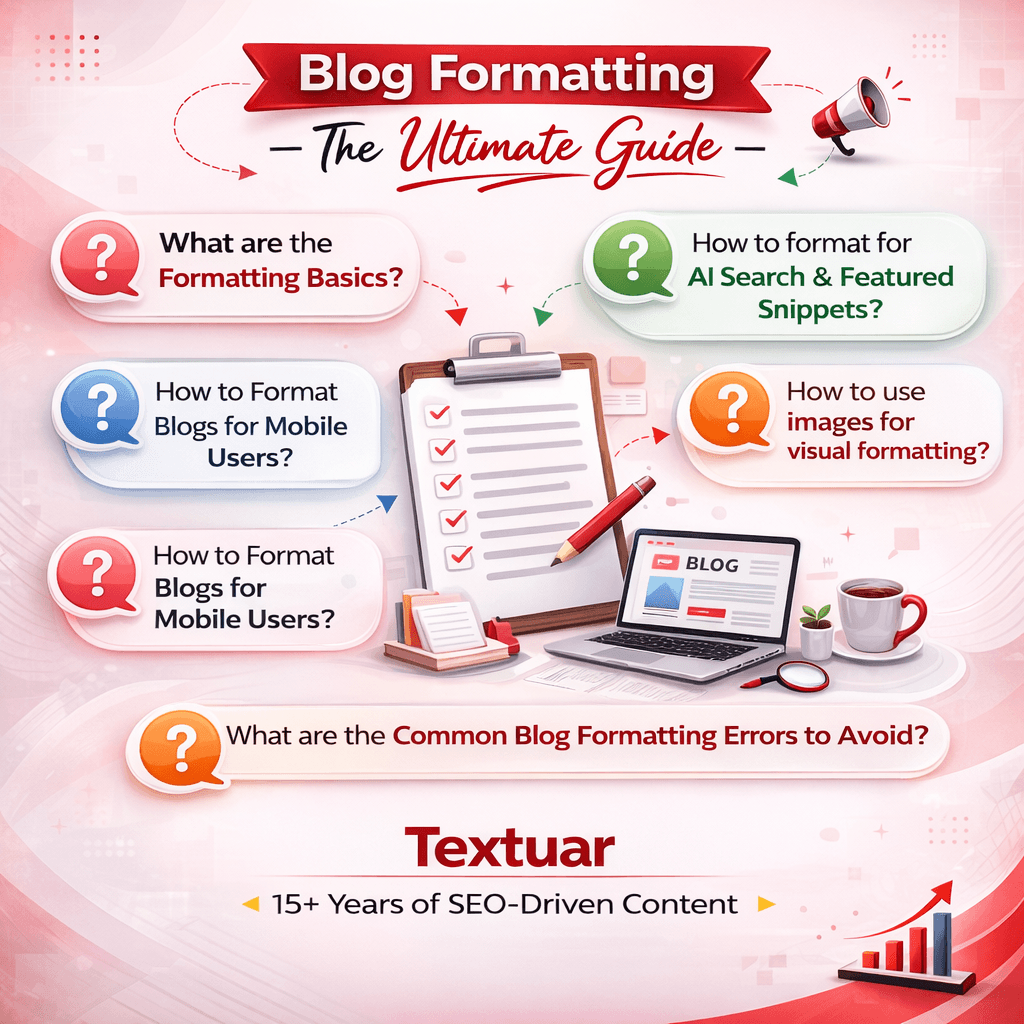
Blog Post Formatting: A Simple Checklist Before You Publish
Before publishing, a quick formatting review can make or break your blog’s success. This checklist focuses on structuring your post for clarity and scannability.
-It starts with verifying your heading hierarchy (H2, H3) to ensure a logical flow for readers and search engines.
-Keeping paragraphs short is crucial for mobile readability, while bullet points help organize complex information.
-The guide also stresses the importance of placing visuals near relevant text and including descriptive alt text for accessibility and SEO.
-Finally, maintaining uniform spacing creates a clean, professional layout.
These simple steps transform good ideas into compelling posts that keep audiences engaged.

B2B Content Marketing Trends to Follow in 2026
B2B content marketing trends in 2026 signal a major shift from volume-driven publishing to authority-driven ecosystems. Brands must use AI as an assistant, not a replacement, while prioritizing interactive and product-led experiences. Verifiable expertise and human-first media build stronger trust in an AI-saturated market. Distribution now matters as much as production, requiring strategic amplification across channels. Generative Engine Optimization ensures visibility inside AI tools like ChatGPT and AI Overviews. Winning teams combine structured systems, expert insight, and intelligent distribution. These B2B content marketing trends redefine how brands attract, educate, and convert modern decision-makers.
How to Use Generative Engine Optimization to Boost AI Search Visibility
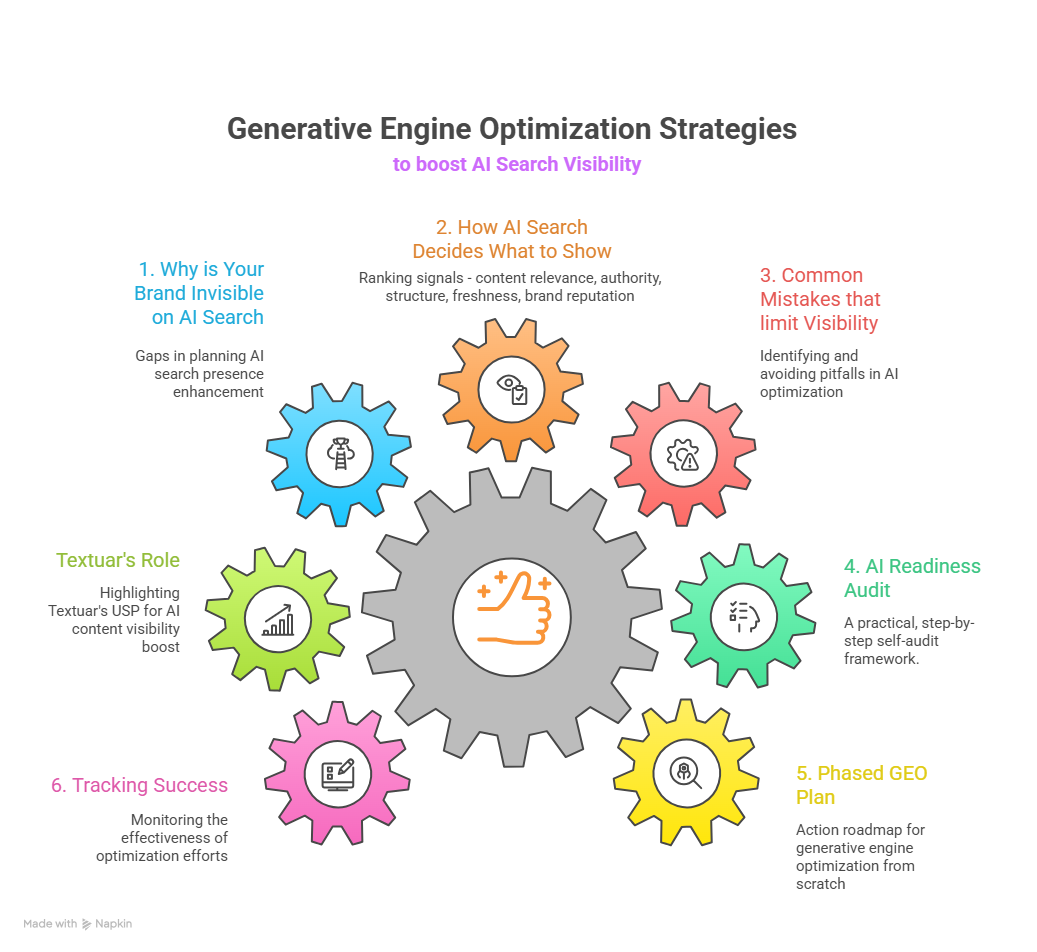
To win in AI search visibility, you must implement Generative Engine Optimization. This means moving beyond keywords and directly answer specific queries and earning third-party citations. This blog covers-
• Why Your Brand Is Invisible to AI Search (Even If Google Loves You) – We cover the issue as a visibility gap, not an SEO gap.
• How AI Search Actually Decides What to Surface – We look at the core ranking signals (content relevance, authority, structure, freshness, brand reputation)
• The 5 Mistakes That Are Killing Your AI Visibility – We check common failure points that can be eliminated with generative engine optimization
• How to Audit Your Brand for AI Search Readiness – Here, we explore a practical, step-by-step self-audit framework.
• A Phased Plan to Rebuild Your AI Search Visibility – You also see a solid action roadmap for generative engine optimization from scratch.
• How to Track Whether It’s Working
• Why Textuar is Ideal for Your Generative Engine Optimization Content Needs

How Textuar Increased CTR and Organic Trial Signups for a SaaS Business?
This case study explains how SaaS SEO CTR optimization helped a mid-stage productivity software company convert visibility into real trial signups. The client was generating impressions on Google but wasn’t receiving clicks or conversions. Textuar reworked titles, metadata, content depth, structured data, technical performance, and intent alignment to match how SaaS buyers compare and evaluate tools.
In 90 days, the company achieved a 200% CTR uplift, jumped 18 SERP positions, captured rich-results, and improved demo and free trial signups. The study highlights why impressions alone don’t matter in SaaS; CTR, buyer intent, and demand framing determine actual conversions.

Why Human Written Content Ranks Higher than AI Content in 2026
Content creation has experienced a dramatic transformation the emergence of ChatGPT and similar tools in 2022. It now enables a
Blog Post Formatting: A Simple Checklist Before You Publish
Before publishing, a quick formatting review can make or break your blog’s success. This checklist focuses on structuring your post for clarity and scannability.
-It starts with verifying your heading hierarchy (H2, H3) to ensure a logical flow for readers and search engines.
-Keeping paragraphs short is crucial for mobile readability, while bullet points help organize complex information.
-The guide also stresses the importance of placing visuals near relevant text and including descriptive alt text for accessibility and SEO.
-Finally, maintaining uniform spacing creates a clean, professional layout.
These simple steps transform good ideas into compelling posts that keep audiences engaged.

5 Ways to Boost SEO with User-Generated Content
Digital customers have fast evolved into discerning, tech-savvy decision-makers. For content marketers, this means that the journey from product awareness