Search behaviour evolves constantly. This is why content that performed well a few years ago quickly loses visibility with time.
Back in the day writing blogs with the right keywords was enough. Then, there was a time when one needed to create content for readers and search engine algorithms. Today, search engines prioritize freshness, depth, and relevance across both traditional results and AI-generated answers. If brands fail to update their existing pages, they risk losing rankings and traffic over time. Updating SEO content development strategies ensures that your content remains accurate and discoverable. It even ensures the content’s competitiveness in the modern search results.
SEO content writing companies know the importance of writing content that can be tested against the effects of time. Such articles drive traffic and prove vital in generating new business in the long run. However, not many pieces of content are a perennial source of visibility and potential.
This is why you need to update content on regular basis.
It not only retains the freshness of the narrative, but also gives timely updates to the reader about the latest trends in the domain being discussed in the blog.
Why should you update content for SEO?
Most content lose their effect in the long run. There are several reasons why content diminish in effect over some time.
Search engines and readers both value accurate, current information. Older content can gradually lose rankings if it does not match evolving search intent or industry trends. Regular updates help retain visibility, improve user engagement and fortify the authority of your SEO content development efforts.
Hence, to keep up with the changes and persevere through the competition, it is essential to update the content.
Take, for example, a blog written in 2024 “Top trends in SEO in 2024”. Now if you want to update the content for 2026, you need to see if all points covered in the original blog are applicable. It might happen that 75% of the points of 2024 blog will still be relevant in 2026.
We need to update in such a way that this 75% of the blog is given coverage. Plus, the remaining 25% new trends will be covered. Overall, the blog will now be fresh and applicable to the current times.
1. Maintains search engine rankings
Search engines tend to lean towards content that features current information and trends. You signal your brand’s relevancy by simply refreshing old pages and information. You end up maintaining or regaining rankings that might have fallen with time.
2. Prevents content decay
Content decay is nothing but the gradual decline you notice in a page’s traffic as well as rankings as it becomes outdated or less relevant. Updating older posts helps prevent this slow loss of visibility. It restores the content’s overall performance.
3. Improves user experience
People anticipate precise as well as up-to-date information. By refreshing statistics, examples and references, you make the content more valuable. This, in turn, encourages visitors to stick around and engage with your content.
4. Increases organic traffic potential
Instead of merely writing new material, revamping of older articles often results in faster results. In order to increase search visibility and get more visitors within a short period of time, you can update keywords, refine the structure and add new information.
5. Strengthens overall site authority
Search engines evaluate websites based on content quality and relevance. Maintaining updated pages demonstrates credibility and supports long-term growth in your SEO content development strategy.
How to update your content?
Content losing its effect over some time is called as content decay. It is a concerning phenomenon for every firm. There are some defined ways to tackle content decay and update the old content.
Content decay refers to the gradual decline in organic traffic and search rankings as content becomes outdated or competitors publish fresher content.
1- Update content for relevance
You need to be strategic with content update in 2026. It is vital to go with an intent-first strategy where the freshness and relevance have a direct impact on the visibility both in search engines and AI answer engines like ChatGPT and Perplexity. To begin with, get rid of old statistics and update them with the new confirmed data. Also, delete all the references that are out of date and that do not represent any current trends or usage of the product.
Keep the content relevant with changing search intent, and respond to certain user questions in an understandable way and at the start. Enhance optimization using semantic keywords and relational entities rather than using an exact-match repetition. Another important point is to enhance extractability by AI Overviews and other answer engines. This can be done by improving structure with clear headings, short paragraphs and multi modal formats such as FAQs and tables.
Most content experts recommend adding new data and credible sources to acquire authority. Internal links can be used to send users to money pages. Don’t forget to check readability, tone and mobile readability to ensure the content appears to be up-to-date and relevant.
2- Rework on keywords and content
As pointed above, the keywords are the breadcrumbs for web articles. Potential customers look up information on the search engine like Google with the help of keywords. Once the search retrieves relevant results, the potential customer clicks on the article, blog, press release or website that matches with their queries the most.
The volatility of keywords demands the continual updates. You can update the keywords and put the content live again. Not surprisingly, you can see a surge in the traffic in no time.
The easiest way to look for new and potentially useful keywords is by using SEO software like Moz, Ahrefs, and SEMrush. You can run a search with the old content in it and get the results enlisting the keyword gaps. Many SEO content development companies have used and have been satisfied with these tools.
In some cases, with the change of the keywords, there is some change required for the content. When updating the facts, even the stats should be updated.
Read more – 5 Ways to Optimize Content Keyword for Better SEO
3- Choose the right format header
Formerly, Google was a keyword-centric search engine. But now it has evolved substantially as a reader-centric search engine. We strongly recommend you to use meaningful headings. Also, make sure to use titles that are in line with the keywords.
We need to understand whether a customer will find the title and headings relevant enough to click on the link. Also, the headings should be placed in proper order. If possible, make it look a step by step method, if not possible, then arrange the most important tip at the top and the least one at the bottom.
Even passages and paragraphs under a specific heading are displayed as snippets in search engine results, if it is relevant to the reader’s query. Also, the content, therefore, has to be concise and informative.
4- Rework the meta-descriptions
Meta descriptions are not the strongest ranking factor, but they influence click-through rate. Search engines analyse user behaviour to determine whether the search result satisfies the query.
While rewriting meta descriptions, think like an advertising copywriter.
Ask yourself questions such as:
- What will encourage someone to visit the website?
- What was missing in the previous meta description?
A compelling meta description can improve the chances of users clicking your result instead of a competitor’s page.
Read more – 6 Tips to Write Compelling Meta Descriptions
5- Use new headlines
Did you know that only 8 out of 10 people read headlines and only 2 out of 10 actually click through? The idea is simple here – headlines influence whether readers engage with your content or not. In fact, people base their decision to read an article just on the headline alone.
Therefore, while reworking your meta descriptions, make sure you also update the headlines to attract more readers.
Effective headlines often signal recency and relevance. For example, a title such as “Digital marketing tips” feels generic. A more precise version like “Proven digital marketing methods for modern businesses” sounds more current and useful.
For articles that include tips, benefits, or guidelines, numerical headlines can also improve engagement. Examples include titles such as “20 ideas to grow your business online.”
Learn more – 5 Tips to Build a Compelling Blog Headline
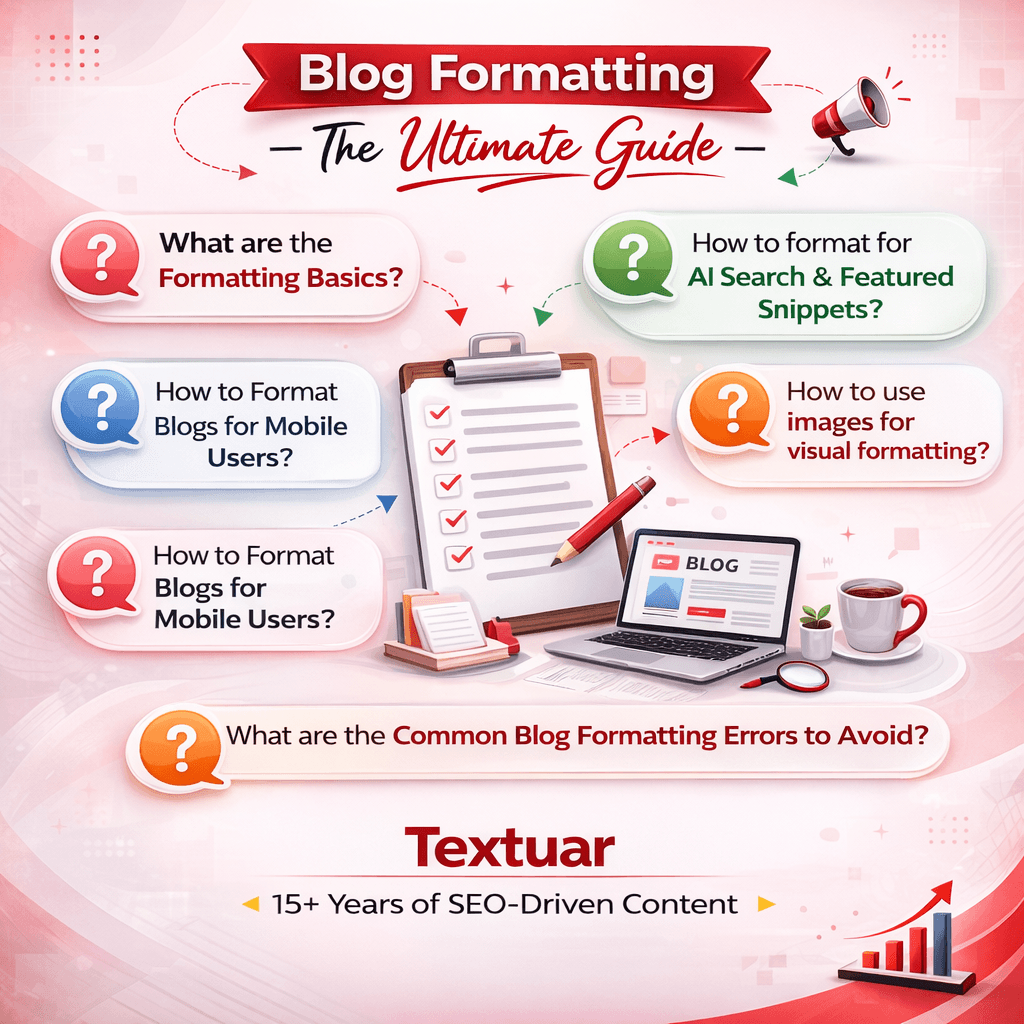
6- Use visuals to augment SEO Content Development
For SEO, content is more useful than anything else. Other things like images, graphics and illustrations also help to hold on a reader. Content is regarded as bland if there are no images, at all. Some pictures are illustrative that they make the explanation of the article easy. Some images have excellent graphics and greatly adumbrate the product and services.
Thankfully, a lot of custom images are illustrative, which make the explanation of the article easy. Some images have excellent details that showcase the products and services in the right way.
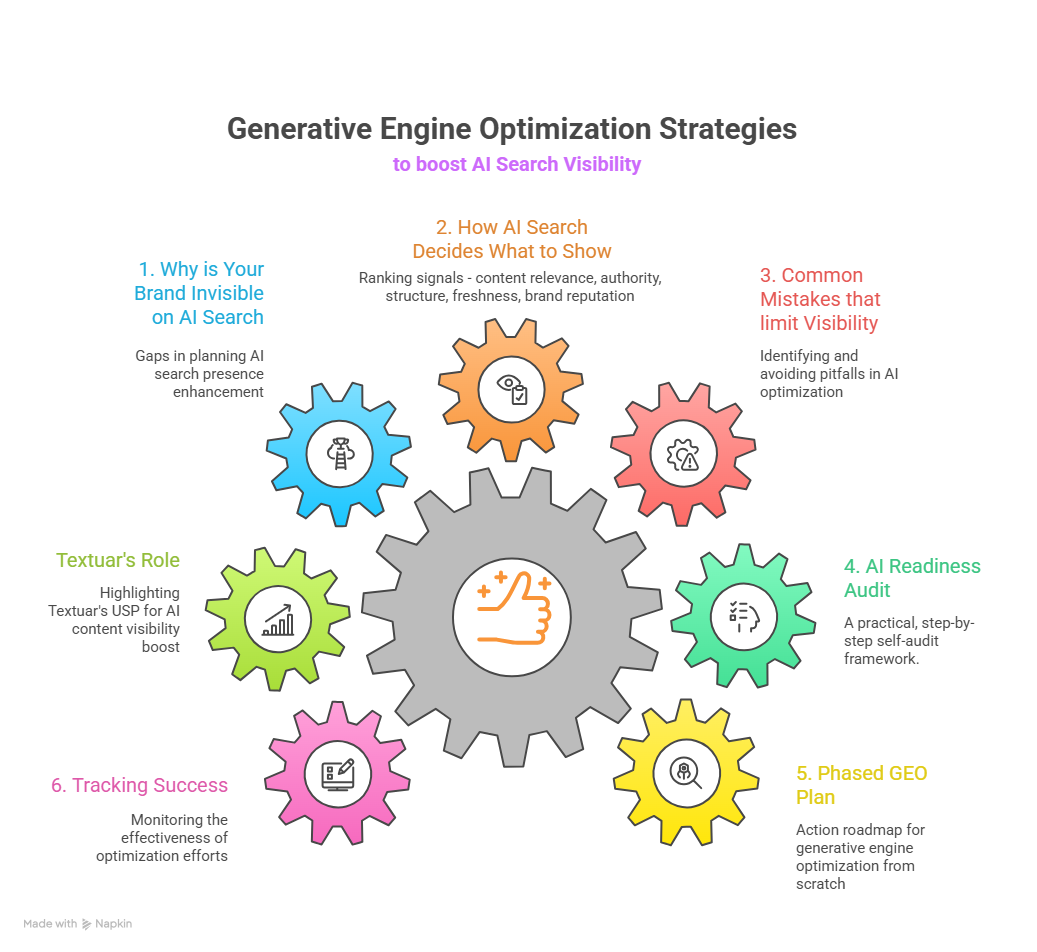
Use brand-explaining images like infographics to augment SEO content development. They also represent the brand well when retrieved on Google images.
Learn More – 5 Ways to Optimize Content Keyword for Better SEO
Here is a quick overview on how to update content for SEO
| Strategy | What It Involves | SEO Benefit |
| Rework keywords and content | Update target keywords, statistics, and factual information | Improves search relevance and rankings |
| Optimise headers | Use clear headings aligned with search queries | Enhances readability and snippet visibility |
| Improve meta descriptions | Write persuasive summaries for search results | Increases click-through rate |
| Refresh headlines | Create engaging, relevant titles | Encourages readers to open the content |
| Add visuals | Use images, graphics, and infographics | Improves engagement and comprehension |
Conclusion
Updating old content is one of the most effective ways to maintain search visibility. Instead of focusing only on new articles, brands should revisit their existing pages and improve them regularly. A strategic refresh strengthens accuracy, improves user experience, and prevents traffic loss. When done consistently, SEO content development updates ensure that your website remains competitive and valuable to both readers and search engines.
FAQs
1. How often should you update website content for SEO?
Most websites benefit from reviewing important pages every six to twelve months. In case the topic tends to change regularly, then you might have to revise it more frequently. By doing so, you will be able to maintain correct data and consistent rankings.
2. What is content decay in SEO?
Content decay is used to describe the progressive decline in searches and organic traffic. It happens when content is no longer relevant or up to date with the newer competing pages.
3. Does updating content improve search rankings?
Yes. Updating keywords, statistics, structure and internal links can help search engines recognise the page as relevant again, which may improve rankings and increase organic traffic.
4. Should you update old content or create new content?
Both approaches are important. However, refreshing high-performing older pages often produces quicker results. It is because they already feature backlinks, authority and existing search visibility.
5. What elements should be updated in an old blog post?
You should review keywords, headings, statistics, examples, visuals, meta descriptions, and internal links. Updating these elements ensures that the content remains accurate, readable, and optimized for search engines.