Last updated on April 24th, 2026
📌 TL;DR – Quick Summary
Zero click searches are rising as search engines increasingly answer user queries directly on the results page. To stay visible, brands and marketers must adapt. Take a look at some solid strategies like focusing on deeper, intent-driven keywords, publishing original insights, and building strong brand authority.
Such steps offer incredible engagement even when there is no traffic to site.
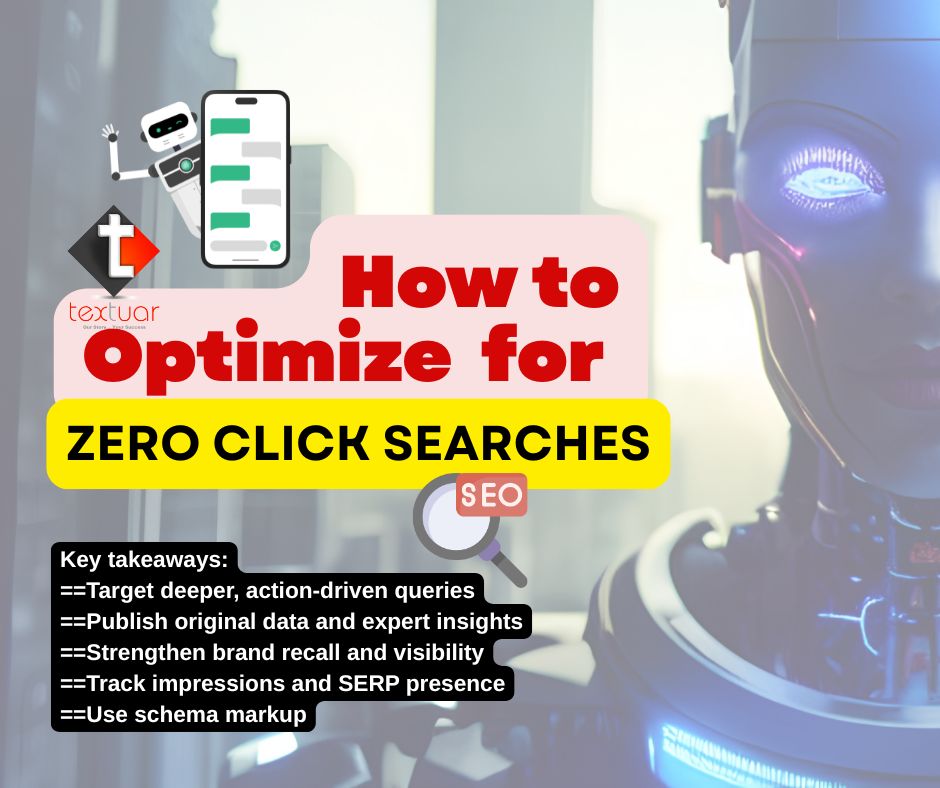
Key takeaways:
==Target deeper, action-driven queries
==Publish original data and expert insights
==Strengthen brand recall and visibility
==Track impressions and SERP presence
==Use schema markup to improve zero-click performance
Time and again, we have seen a recent phenomenon in content marketing – you work hard to write truly amazing content, make it to page one of Google, and still, users NEVER click. It seems so unfair. But it’s not your fault. Search engines have evolved to answer engines, answering questions instantaneously within the SERP. Instead of fighting the change, winning brands understand the tide well enough to position themselves to shine even without the click.
This is the era of zero click searches.
Zero click searches have quietly altered the landscape for SEO. Consumers want answers immediately, and search engines now serve them on the results page itself; no need to click over to a website. That movement can overwhelm your analytics and make your strategy seem old fashioned.
But here’s the truth: you can still win big if you get how zero click behaviour works and re-engineer your content for visibility, authority, and conversions.
How? Let us find out in this blog.
What are zero click searches?
A zero click search happens when a user types a query into a search engine and receives an answer (or sufficient information) directly on the search engine results page (SERP) without needing to click through to a site.
For example, if you search “time in Tokyo” or “calories in a banana,” the result may display directly on the SERP rather than requiring you to load a webpage.
In short: the user’s intent is resolved in the result page itself.
What is an example of zero click search?
One way to understand zero click searches is by considering what happens when a pitch perfect stranger types “SEO” into Google. You will notice that the search engine no longer forces you to open a blog or guide. Instead, it immediately shows a box with definitions, related questions and sometimes even an AI-generated summary.
The user sees:
- An easily digestible definition for SEO (usually from a well known website)
- A featured snippet that describes what SEO is.
- People Also Ask (PAA) questions such as “Why is SEO important?”
- Knowledge panel-style information snippet featuring key details
And since all this information is directly on the SERP, most people don’t click anything. They have just got a mini lesson about what SEO is. That single query illustrates a quintessential zero click behavior: the intent gets fulfilled immediately and there is no visit to any website by the user.
It’s the exact reason why broader, high level terms such as “SEO,” “digital marketing” or “content writing” are now dominated by zero click results that still get insane search volume with very low CTR.
Why zero click searches matter for SEO?
When clicks decline, many marketers worry. But zero click searches still matter if you shift your mindset.
- First, even if a user doesn’t click your site, your brand can still appear. That means visibility and recognition come first.
- Second, traditional click-through rate (CTR) metrics are under pressure. For instance, in one study the CTR for position 1 results fell by 34.5% when an AI overview appeared.
- Third, when users consistently receive high-quality answers from your brand (even without clicking immediately), they are more likely to return later or engage in other ways (newsletter sign-ups, direct visits).
- Fourth, since search engines are increasingly evolving into answer engines (delivering answers, not just links), your SEO strategy must evolve too, to cover answer engine optimization.
In essence: clicks aren’t dead, but they’re not the only measure of success anymore.
The main types of zero click searches results
On the SERP, various features cause zero click behaviours. According to SurferSEO, here are five major types:
1. AI Overviews
These are generative answers built by search engines (e.g., Google) that synthesize information directly from multiple sources and show it at the top of the SERP.
2. AI Mode (interactive chat style)
A new feature (to date more widely used in India and the U.S.) where users can ask follow-up questions in a chat-style interface within the search system itself.
3. Featured Snippets
They are short blocks (definition, list, table) extracted from a webpage and displayed above organic results. Although some people continue to click them, they are progressively fulfilling user intent without clicking.
4. Knowledge Panels
Designed for people, locations or organizations. They display a summary (usually on the right side) and might show significant facts even without requiring an extra click.
5. People Also Ask (PAA)
They are accordion boxes that are expandable showing related questions. Users can expand answers by clicking, but usually get enough information in the preview on the SERP and do not click through.
Understanding these features helps you align your content so your brand appears within the results (even without clicks) and still extracts value.
How to Optimize Your Content for a Zero click World
As a marketer, you need to optimize for zero click to remain relevant in 2026 and beyond. Let us see how you can rank on SERP features other than organic blue links and build trust and impressions. These practical strategies are sure to boost brand recall and improve engagement even in the era of zero click searches.
| Strategy | What It Means | Why It Helps in Zero click SEO |
| Focus on deeper, intent-rich queries | Target mid-funnel and bottom-funnel keywords instead of generic “what is…” terms. | Less competition, higher conversion intent, and reduced likelihood of being overtaken by AI summaries. |
| Use original data & expert insights | Publish studies, insights, case results, and unique data. | AI and search engines prefer fresh, first-party information for snippets and overviews. |
| Build brand authority & recall | Use consistent tone, storytelling, social proof, and cross-channel visibility. | Even if users don’t click, they remember your brand and return later through direct or branded searches. |
| Adapt KPIs beyond clicks | Track impressions, scroll depth, mentions, and SERP feature presence. | Shows true visibility and authority in a world where CTR naturally declines. |
| Answer long-tail & related questions | Create FAQ sections, cluster blogs, and question-based headings. | Helps your content appear in PAA, featured snippets, and multiple SERP positions. |
| Implement schema & structured data | Use FAQ, How-To, Product, Review, and relevant schema types. | Makes it easier for search engines and AI to extract your information confidently for zero click features. |
1. Focus on deeper queries (middle & bottom of funnel)
One should not fight generic top-of-funnel questions that Google or AI can answer easily, such as what is SEO. Rather, focus on more specific action-oriented questions like best SEO strategies in small businesses or AI SEO audit checklist.
These reflect a proper intent to act, subscribe or purchase. Such keywords are less competitive and provide you with more authority over your conversion rates- even in the zero clicks space.
2. Use original data, case studies, and expert insights
Google prefers content that adds something new. Integrate your own research, unique statistics, interviews, or client results to make your page irreplaceable. Search engines and AI tools like AI Overviews and ChatGPT frequently reference data-rich, first-hand content in snippets and overviews.
Original content builds topical authority and makes your content valuable enough to appear in AI summaries or People Also Ask boxes, even when users don’t click through.
3. Build brand authority and visibility
In a zero click ecosystem, your brand visibility becomes just as vital as your rankings. Appear consistently through SERP features, social proof, and content collaboration. Use storytelling and a distinct tone of voice to strengthen recall. When your name becomes familiar, users remember and revisit it through branded searches or direct visits. This turns zero click impressions into long-term brand equity that compounds over time.
4. Adapt your KPIs beyond traditional clicks
SEO success is no longer measured only in traffic. You must track:
- Impressions
- Brand mentions
- Scroll depth
- Engagement
Evaluate how often your content appears in featured snippets, knowledge panels, and AI overviews. These indicate visibility and authority—important leading metrics before conversions happen. Adjusting KPIs to focus on visibility and conversions rather than just CTR helps you see the real performance of your SEO investments.
5. Answer a wide set of long-tail and related questions
Long-tail search queries often generate PAA boxes and featured snippets. It is best to develop specific FAQ sections, cluster blogs, or standalone explainers that answer these smaller, specific questions properly.
You can write in a conversational tone and use question headings. This increases your likelihood of appearing on the same SERP multiple times. The technique also uplifts brand exposure even if users don’t click every link. It is a low competition, scalable approach to dominate contextual visibility.
6. Implement structured data and schema markup
Search engines can better understand and feature your pages with the help of structured data. Wherever relevant, include the FAQ Page, How To, Product, or Review schema. This is an intermediate step to your rich results and voice search responses.
Schema is an assistant to AI tools and search engines extract your content confidently for snippets and overviews. Proper markup might be the reason why your presence at the zero click level is increased without the need for a direct interaction. This helps you get better CTR from users who are looking for credibility and context.

Conclusion
Zero click searches might feel like a threat to traditional SEO, but they’re really an evolution. Your site doesn’t always need to earn a click to deliver value. Visibility on the SERP, brand recognition and conversions still count. By shifting your focus from pure traffic to strategic visibility, you can optimize content for SERP features. Also, implementing schema and tracking the right metrics, you can thrive even in a click-less search world.
Connect with us at Textuar to win with answer engine and AI searches.
FAQs
1. What is a zero click search?
A zero click search occurs when a user directly finds their answer on the search results page and does not even visit any site.
2. Why is zero click search important?
They are growing because search engines such as Google are now providing AI summaries and knowledge panels. These features can answer most questions without requiring a click. Marketers need to come on these snippets so that they get more leads.
3. Do zero clicks indicate that my site has lost value?
Not necessarily. Your brand may become more visible by appearing in such search results. Even if users don’t click, this visibility helps build trust and encourages future interaction with the brand.
4. How can I optimize for zero click search features?
Publish original research and focus on answering long-tail questions. To facilitate your content showing up in SERP features like PAA, featured snippets, and knowledge panels, you can add structured data and develop your brand authority.
5. Should I stop chasing clicks and just aim for zero click visibility?
No. You still need to focus on conversions and site engagement. However, you should broaden your goals to cover reach and brand awareness, even if the number of clicks decreases.